
Your data on MRCVSonline
The nature of the services provided by Vision Media means that we might obtain certain information about you.
Please read our Data Protection and Privacy Policy for details.

In addition, (with your consent) some parts of our website may store a 'cookie' in your browser for the purposes of
functionality or performance monitoring.
Click here to manage your settings.
If you would like to forward this story on to a friend, simply fill in the form below and click send.

Your friend's email:
Your email:
Your name:
 
 
Send Cancel

Results of UK’s first major neutering audit revealed
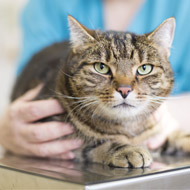
Neutering in cats produced less abnormalities than in dogs and bitches.
Over 30,000 neutering cases produces benchmark for the veterinary profession

A major audit of the routine neutering of cats and dogs across UK veterinary practices has been completed. Veterinary practices will now be able to measure their performance against the national average.  

VetAUDIT, originally an independent project now under RCVS Knowledge, has revealed the following key data points:

  • over three-quarters of cases presented with no abnormalities
  • between 8.2 per cent and 9.1 per cent of cases required medical treatment or surgical intervention due to abnormalities
  • approximately one in ten cases were deemed abnormal but did not require further treatment
  • the fatality rate of all cases was 0.1 per cent
  • neutering in cats produced less abnormalities than in dogs and bitches
  • spays resulted in more complications than castrates in both cats and dogs.

“Benchmarking is a great way to compare how your practice is performing compared to the national average” explains Bradley Viner, chair of the Quality Improvement Advisory Board at RCVS Knowledge and part of the vetAUDIT team.

However, Viner added the caveat that the data “needs to be the first stage in a quality improvement process… We have to recognise that we work in complex systems that do not always function perfectly. Recognising that we can always do things better and discouraging defensive behaviour are the first steps in driving forward quality of care”.

Practices can read the full results and include their own data in the audit with free-of-charge analysis at https://vetaudit.rcvsk.org


 

Become a member or log in to add this story to your CPD history

Defra shares new Sanitary and Phytosanitary guidance

News Story 1
 Defra has published guidance for the vet sector ahead of a proposed UK-EU Sanitary and Phytosanitary agreement.


The agreement, which will change the movement and trade of animals and related products, could see reductions in checks, paperwork and certification. As well as describing regulatory developments, the advice highlights the importance of animal ID, registration and traceability in disease control and other compliance arrangements.

The guidance can be found here. More detail is expected as negotiations progress. 

Click here for more...
News Shorts
BSAVA publishes fifth Manual of Canine and Feline Neurology

The BSAVA has published the fifth edition of its BSAVA Manual of Canine and Feline Neurology.

The new edition has been reviewed and updated, including new developments in diagnostics, therapeutic approaches and clinical decision-making. It is structured to support clinicians through diagnosis, treatment and long-term management.

The guide features five new chapters covering acute myelopathies, chronic myelopathies, emergency protocols, neurotoxicology and neuro-oncology.

It also includes over 100 videos, including demonstrations of neurological examinations, clinical presentations and diagnostic procedures.

Nicola Lloyd, publishing manager, said: "Whether you're a general practitioner seeking practical guidance, or a specialist aiming to refine your expertise, this edition remains an indispensable reference for anyone involved in the care of neurologically compromised dogs and cats."