


Stem cell treatment a ‘breakthrough’ for equine lameness
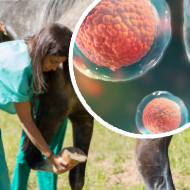
“Arti-Cell® Forte contains stem cells that have been chondrogenically induced and therefore primed to develop into the cartilage cell lineage".
The first stem cell-based medicine to receive marketing authorisation for the treatment of equine lameness has been launched by Boehringer Ingelheim.
Hailed as a ‘breakthrough medicine’ for degenerative joint disease in horses, Arti-Cell Forte is the first ‘ready-to-use’ stem cell-based product to be licensed in any veterinary species. It is also the only stem cell treatment to contain induced cells, marking a significant step in stem cell therapies and medicine as a whole.
“Arti-Cell® Forte contains stem cells that have been chondrogenically induced and therefore primed to develop into the cartilage cell lineage,” explained DR Amy Scott MRCVS, Boehringer Ingehlheim’s performance horse portfolio manager.
“Studies have shown that chondrogenically induced stem cells demonstrate an enhanced clinical outcome compared to un-induced stem cells in the treatment of joint disease in horses. This makes Arti-Cell® Forte a highly targeted and effective treatment for cartilage damage associated with degenerative joint disease.”
The medicine is available to veterinary practitioners direct from Boehringer Ingelheim. It is stored at ultra-low temperatures to maintain its two-year shelf life, either frozen at -70 ⁰C to -90 ⁰C (dry ice, -80 ⁰C freezer) or -196 ⁰C (liquid nitrogen) until immediately before injecting.
Full training on storage and administration of the medicine is available from the Boehringer via face-to-face CPD at practice meetings or specific CPD events. For more information about these events, email vetenquiries@boehringer-ingelheim.com


 Veterinary practices are being urged to help owners safely dispose of any unused and expired pet medicines - not just antibiotics - during November's Animal Medicines Amnesty.



