


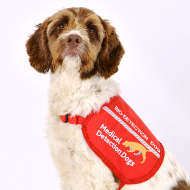
Researchers assess dogs' ability to detect bacteria at ultra-low concentrations
Medical detection dogs could be used to identify the bacteria that cause lung damage in cystic fibrosis (CF) before it takes hold, according to new research.
Findings published in the European Respiratory Journal show that medical detection dogs have a very high level of accuracy when asked to identify bacteria associated with serious lung infections.
One of the leading causes of lung damage in CF is infection with bacterial pathogens, the most prevalent being Pseudomonas aeruginosa (Pa). Pa chronically infects some 60 per cent of the 10,000 patients in the UK by adolescence and adulthood.
The study revealed that medical detection dogs can sniff-out Pa bacteria grown in a nutrient liquid that also contains other CF bacterial pathogens. Researchers conclude that dogs could eventually prove more sensitive and cost-effective for screening lower airway infection in CF, compared with existing technologies.
The study was conducted by Imperial College London and Royal Brompton Hospital, in collaboration with Medical Detection Dogs, supported by the Cystic Fibrosis Trust.
“This is a really exciting development. Advanced technology to detect infections, for example in breath, has proved difficult so far,” explained Professor Jane Davies, from Imperial College London. “The successful training of the dogs on cultured samples will now be used as the foundation for testing patient samples directly.”
In the study, researchers assessed the ability of four dogs to detect Pa from other CF-causing bacteria. The bacteria were grown in the laboratory, filtered out of the solution and presented to the dogs.
The dogs were trained and tested on customised sample presentation stands. During the training period, the dogs were rewarded for identifying Pa correctly with food and the sound of a click.
After training, the dogs were given Pa-positive samples, other cultured bacterial controls or sterile liquid in a random, computer-generated sequence. The dogs indicated a positive sample by stopping or sitting down and were rewarded if correct.
The samples were then presented to the dogs in a double-blind testing scenario.
“The findings of this world-first study into the ability of dogs to detect Pseudomonas are yet another indicator of their remarkable contribution to saving human lives,” commented Dr Claire Guest, Chief Executive and co-founder of Medical Detection Dogs.
“Pseudomonas is a condition that affects thousands of people each year in the UK alone. I can assure them that Medical Detection Dogs is working very hard to find effective, affordable and sustainable ways to manage their condition.”
Image (C) Medical Detection Dogs.


 Companies marketing medicines for small pets exempt from authorisation must submit their annual return to the Veterinary Medicines Directorate (VMD) by 30 November 2026.



