
Your data on MRCVSonline
The nature of the services provided by Vision Media means that we might obtain certain information about you.
Please read our Data Protection and Privacy Policy for details.

In addition, (with your consent) some parts of our website may store a 'cookie' in your browser for the purposes of
functionality or performance monitoring.
Click here to manage your settings.
If you would like to forward this story on to a friend, simply fill in the form below and click send.

Your friend's email:
Your email:
Your name:
 
 
Send Cancel

Scientists ID gene mutation responsible for blue eyes
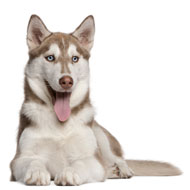
The genetic variant discovered by Embark is particularly prevalent in Siberian huskies.
Genetic variant is particularly prevalent in Siberian huskies 

Scientists have identified the genetic mutation that is responsible for blue eyes in dogs.

In the largest study of its kind, DNA company Embark gathered data from 6,000 dogs. Owners carried out at-home DNA tests and completed online surveys about their dog’s appearance and health.

Blue eyes appear most often in Siberian huskies but the trait also applies to breeds such as the Australian shepherd and many mixed breed dogs.

The genetic variant discovered by Embark is particularly prevalent in Siberian huskies and scientists say it explains nearly all occurrences of blue eyes and heterochromia (multi-coloured eyes) in the breed.

Embark CEO and founder Ryan Boyko said: “Making this discovery marks an enormous milestone in the capabilities of crowdsourced genetic research in animals besides humans. By working with our own customers’ pets, we have successfully identified the genetic marker for a key canine trait.

“We are just touching the tip of the iceberg in genetic discoveries in our canine companions. In analysing crowdsourced data, we will continue to make discoveries that teach us more about the biology of canines in the hopes that someday we will end preventable disease in man’s best friend.” 

Become a member or log in to add this story to your CPD history

Equine Disease Surveillance report released for Q4 2025

News Story 1
 The latest Equine Disease Surveillance report has been released, with details on equine disease from Q4 of 2025.

The report, produced by Equine Infectious Disease Surveillance, includes advice on rule changes for equine influenza vaccination.

Statistics and maps detail recent outbreaks of equine herpes virus, equine influenza, equine strangles and equine grass sickness. A series of laboratory reports provides data on virology, bacteriology, parasitology and toxicosis.

This issue also features a case study of orthoflavivus-associated neurological disease in a horse in the UK. 

Click here for more...
News Shorts
Applications open for BEVA Back in the Saddle

The British Equine Veterinary Association (BEVA) has opened applications for its 'Back in the Saddle' coaching programme.

The online scheme offers structured group coaching for members wanting to reflect on their career path and regain clarity. Members may be returning to work after leave, uncertain about next steps or reassessing direction.

Attendees will benefit from impartial guidance and practical tools to support their professional development. Members are encouraged to take a 'proactive, future-focused approach' to their careers.

The sessions, taking place on Wednesdays from 7.30pm-9pm, are open to BEVA members with more than five years' experience. The first session takes place on Wednesday, 3 June 2026.

Applications will close on Wednesday, 27 May 2026.

