


IVF could bring back northern white rhinos
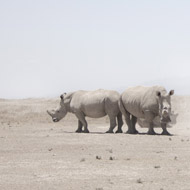
With only two females left in existence, northern white rhinos are functionally extinct. (Stock photo)
Northern white rhinos could be brought back from the brink of extinction, after scientists successfully created the first hybrid embryos.
With only two females left in existence, the species is functionally extinct. But in a groundbreaking new study, scientists managed to adapt reproduction techniques used in horses, to offer fresh hope for the species.
An international research team used assisted reproduction techniques (ART) to create the hybrid embryos, with eggs from southern white rhinos and cryopreserved sperm from deceased northern white rhinos. Several embryos are now cryopreserved, to be transferred into surrogate mothers in future.
“The successful development of a hybrid embryo is a major step towards the first birth of a Northern White Rhino through artificial reproduction techniques,” said Jan Stejskal, from Dvůr Králové safari park in the Czech Republic.
The team said they are now well prepared to go to Kenya to collect oocytes from the remaining two northern white rhino females. ‘Pure’ blastocysts could then be produced, using both eggs and sperm from northern white rhinos.
However, as there are only two females left and the available semen comes from just four male rhinos, it is unlikely that the above techniques will be enough to create a self-sufficient population, with the necessary amount of genetic diversity. With this in mind, scientists are working on an additional approach - generating gametes using stem cell technology.
Professor Cesare Galli, of Avantea, which is a world leader in ART, explained: “Pluripotent stem cells have the ability to self-renew indefinitely and to develop into any cell of a living organism. We - at Avantea - successfully generated SWR embryonic stem cells with all the features of undifferentiated cells and a high capacity for differentiation in different cell lineages.”
Steven Seet, of the Leibniz Institute for Zoo and Wildlife Research in Berlin, commented: “This research is groundbreaking. We are witnessing the development of a method that can help to compensate the negative impact of humans on nature.”


 Veterinary practices are being urged to help owners safely dispose of any unused and expired pet medicines - not just antibiotics - during November's Animal Medicines Amnesty.



