


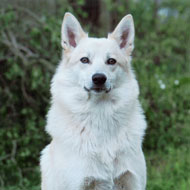
Scientists at the Animal Health Trust (AHT) have identified a genetic mutation that is responsible for cerebellar ataxia in Norwegian buhunds.
A DNA test is now available from the trust, to help breeders identify carriers and prevent the disease being passed down to puppies.
Cerebellar ataxia can affect dogs from just 12 weeks of age, causing uncoordinated movement and head tremors. The disease is progressive but there is currently no effective treatment available, meaning affected animals are often euthanised on welfare grounds.
The breed’s health co-ordinator, Margaret Deuchar, commented: “Although we have not been aware of any clinically affected puppies in the last few years the research has confirmed that we do still have carrier dogs in the present population, meaning an affected puppy could arise at any time.
“With the DNA test now available we can prevent another puppy suffering this horrendous condition and hopefully over a number of years progressively reduce the prevalence of the mutant recessive gene - without making our numerically small gene pool even smaller, and thus putting the breed at increased risk of different genetic diseases.”
Geneticists tested 146 Norwegian buhunds - who were not showing signs of cerebellar ataxia - for the causative mutation. The group of 146 dogs consisted of 70 UK dogs (from which samples were collected between 2008-2015), 36 UK dogs (from which samples were collected in 2017) and 40 dogs from Finland (born 1998-2012).
The first UK set of dogs (2008-2015) included significantly more carriers than the other two sets, but carriers of the mutation were identified in both the UK samples from 2017 and the samples from Finland. This shows the mutation is still present in the Norwegian buhund population.
Hereditary cerebellar ataxia appears to be recessive in Norwegian buhunds, according to the AHT. None of the unaffected 146 dogs had two copies of the mutation, whereas all affected dogs that were tested as part of the research had two copies of the mutation.
Dr Cathryn Mellersh, head of canine genetics at the AHT, said: “We’re very happy to be able to help this breed swiftly eliminate any potential carriers, and therefore affected dogs with cerebellar ataxia, and to demonstrate that whole genome sequencing really works as a method of speeding up mutation identification and developing new DNA tests.”
The DNA test can be ordered from: www.ahtdnatesting.co.uk
Image courtesy of AHT


 Veterinary practices are being urged to help owners safely dispose of any unused and expired pet medicines - not just antibiotics - during November's Animal Medicines Amnesty.



