
Your data on MRCVSonline
The nature of the services provided by Vision Media means that we might obtain certain information about you.
Please read our Data Protection and Privacy Policy for details.

In addition, (with your consent) some parts of our website may store a 'cookie' in your browser for the purposes of
functionality or performance monitoring.
Click here to manage your settings.
If you would like to forward this story on to a friend, simply fill in the form below and click send.

Your friend's email:
Your email:
Your name:
 
 
Send Cancel

Scientists develop new bTB test
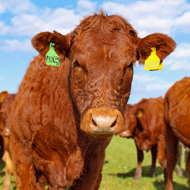
The Actiphage test can detect live bacteria in blood or milk in as little as six hours.
Test can detect infected cattle before infection spreads

A new testing kit for bovine tuberculosis (bTB) is set to bring fresh hope to farmers across the United Kingdom.

Developed by PDB Biotech, the Actiphage test can detect live bacteria in blood or milk in as little as six hours and has been proven to identify infected cattle before infection spreads.

“The existing skin test is based on the animal’s immune response, and takes three days to produce a result, but more worryingly is known to miss about 20 per cent of infected animals,” said Dr Cath Rees, co-founder of PBD Biotech.

“Our new test is unique as it is the only test that directly detects live bacteria in blood or milk and is fast, specific and highly sensitive. Additionally the test can distinguish between a vaccinated and an infected animal (DIVA test) paving the way for new types of disease control in the future when vaccines are available.”

The launch of the test follows a trial in the West Country with veterinary surgeon Dick Sibley. Sibley tested for bTB in blood, milk and faeces and found that the phage test was able to detect infection months before the skin test gave a positive result. By using the test, and introducing strict biosecurity and hygiene controls, Sibley managed to reduce levels of bTB from the herd, leading to the first clear skin test results for five years.

PBD Biotech states that the test is not yet licensed for commercial use. However, it is available for research and validation studies, which are vital for approval by Defra and other global authorities.

They add that it could also be used by the dairy industry, allowing for the rapid detection of contaminated milk. It may also give cows a clean bill of health before travel, preventing disease spread and giving the industry new ways to control movement of potentially infectious animals.

The test will be available from the end of November 2017 via www.pbdbio.com

Become a member or log in to add this story to your CPD history

New RCVS Academy courses to remove barriers in vet care

News Story 1
 The RCVS Academy has launched two courses to its new client support series, as it seeks to improve accessibility in veterinary settings.

The courses will help professionals to support assistance dog partnerships and clients with hearing loss.

The Hearing loss and Assistance dogs courses saw RCVS project lead Catherine Hemingway collaborate with the British Deaf Association and Assistance Dogs UK. Vets will gain practical guidance on supporting clients with additional needs.

Each course takes an hour to complete, and can be accessed by RCVS registrants for free. 

Click here for more...
News Shorts
APHA launches free virtual work experience programme

The Animal and Plant Health Agency (APHA), in collaboration with Springpod, has launched a free virtual work experience programme, giving young people across the UK the chance to explore careers dedicated to protecting animal and plant health.

The on-demand programme offers a unique insight into career opportunities within APHA, showcasing how students can contribute to tackling some of the UK's most critical biosecurity and environmental challenges.

Designed for students aged 13 and over, the course includes more than 10 hours of engaging content featuring real-life industry insights, scenario-based challenges, and practical guidance on applying for jobs. To register for the course, visit the APHA website.

