


Geckos are largest animals able to scale walls, study finds
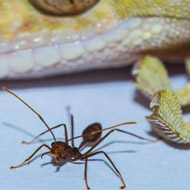
Ants and geckos have very similar sticky feet, even though they are vastly different in size.
Geckos are the largest animals able to scale vertical walls, according to new research.
A study by the University of Cambridge found that in climbing animals, that percentage of body surface covered by adhesive footpads increases as body size increases.
This increase in size sets a limit to the size of the animal with this ability, as bigger animals would require impossibly large and sticky feet.
Scientists say that the finding could have "profound implications" for developing large-scale bio-inspired adhesives, which are currently only effective on very small areas.
In the study, researchers compared the footpad size and weight of over 200 climbing animal species including insects, frogs, siders, lizards, and even a mammal.
They found that although some species were vastly different to each other - such as gecko and ant - their sticky feet were remarkably similar.
Lead researcher David Lobonte explains: “Adhesive pads of climbing animals are a prime example of convergent evolution – where multiple species have independently, through very different evolutionary histories, arrived at the same solution to a problem. When this happens, it’s a clear sign that it must be a very good solution."
The scientists also found that larger animals make their footpads stickier so they can climb vertical walls.
“We noticed that within some groups of closely related species pad size was not increasing fast enough to match body size yet these animals could still stick to walls,” says Christofer Clemente, a co-author from the University of the Sunshine Coast.
“We found that tree frogs have switched to this second option of making pads stickier rather than bigger. It’s remarkable that we see two different evolutionary solutions to the problem of getting big and sticking to walls.
Researchers say that the study, published in the journal PNAS, emphasis the importance of scaling for animal adhesion.
"Scaling is also essential for improving the performance of adhesives over much larger areas, " said Labonte.
"There is a lot of interesting work still to be done looking into the strategies that animals use to make their footpads stickier - these would likely have very useful applications in the development of large-scale, powerful yet controllable adhesives.”


 Veterinary practices are being urged to help owners safely dispose of any unused and expired pet medicines - not just antibiotics - during November's Animal Medicines Amnesty.



