


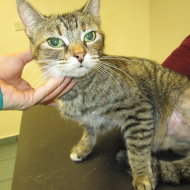
Saffy ‘lucky to be alive’ after hiding under a neighbour’s bonnet
Veterinary surgeons who performed life-saving treatment on a cat after its leg got trapped in a fan belt are warning drivers to check under their cars and bonnets before switching on their engines.
Former stray Saffy was freed by a mechanic and rushed to Bradford PDSA Pet Hospital after hiding under a neighbour’s car bonnet to keep warm. Sadly, her leg was beyond repair and the vet team had no choice but to amputate.
“Saffy is very lucky to be alive and, thankfully, we now expect her to make a good recovery,” explained PDSA vet Rachel Bishop. “Sadly, it’s not unusual for us to hear about this type of accident happening over the colder months – cats often seek out warm places and a recently driven car engine can seem like a safe, cosy place for a snooze.
“We’d advise drivers to check under their cars and wheel arches before switching engines on, particularly if the car has been used within the last few hours and the engine might still be warm.”
Owner Shameener Baker said that Saffy had hidden under a neighbour’s car bonnet. Unaware that she was there, her neighbour switched on the engine and her leg caught in the fan belt, completely severing her thigh bone.
“Our neighbour heard Saffy scream when he turned the engine on. He turned it off straight away and opened the bonnet to find her tangled up and in anguish. Another passing neighbour recognised Saffy immediately and came to get me, it was awful to see her and I didn’t know what to do. We couldn’t free her she was so badly trapped, so we called a mechanic.”
A PDSA spokesperson said: "Saffy has now made a full recovery and is managing great on three legs. However, the incident has left its mark on her – she is now scared of cars and mostly stays indoors."


 Veterinary practices are being urged to help owners safely dispose of any unused and expired pet medicines - not just antibiotics - during November's Animal Medicines Amnesty.



