


Isoflurane shortage: Webinar launched to help vets
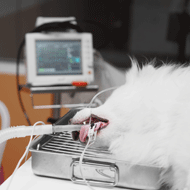
The webinar covers the use of low flow anaesthesia and monitoring techniques.
The nationwide shortage of isoflurane has prompted the BSAVA to commission a webinar discussing alternative solutions for vets.
It was announced last month that the third-party manufacturer of isoflurane had to cease production, owing to a mechanical problem on the production line.
The webinar, ‘Anaesthesia without isoflurane’, was delivered by Ian Self, a European and RCVS specialist in veterinary anaesthesia and analgesia at the University of Nottingham.
It was designed to answer questions supplied by BSAVA members since the shortage was announced. It covers the use of low flow anaesthesia and monitoring techniques, to spare gaseous anaesthetic agents and offers tips on partial and total intravenous anaesthesia (PIVA and TIVA).
The webinar will be available online until March and is free for BSAVA members, costing £25+VAT for non-members. BSAVA is also offering free access to a chapter on ‘Injectable anaesthetics’ from the Manual of Canine and Feline Anaesthesia and Analgesia, 3rd edition.
Both are available as a collection in the BSAVA library.
Lucie Goodwin, BSAVA head of education, said: “BSAVA is taking important action to ensure we support the whole veterinary profession during these challenging times, and the information we have made available has been tremendously well received.
“The webinar hopefully answers many of the questions the profession has about what to do during this nationwide shortage of isoflurane, and the manual chapter is a useful additional resource that offers practical advice throughout.”


 Companies marketing medicines for small pets exempt from authorisation must submit their annual return to the Veterinary Medicines Directorate (VMD) by 30 November 2026.



