
Your data on MRCVSonline
The nature of the services provided by Vision Media means that we might obtain certain information about you.
Please read our Data Protection and Privacy Policy for details.

In addition, (with your consent) some parts of our website may store a 'cookie' in your browser for the purposes of
functionality or performance monitoring.
Click here to manage your settings.
If you would like to forward this story on to a friend, simply fill in the form below and click send.

Your friend's email:
Your email:
Your name:
 
 
Send Cancel

Genetics insights in chickens could tackle food poisoning
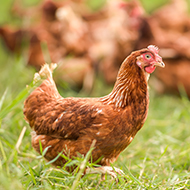
The findings could inform future research into breeding chickens that are at reduced risk of carrying Campylobacter.
Scientists identify genes that may influence resistance to Campylobacter.

Researchers at the University of Edinburgh’s Roslin Institute have identified key genes in chickens that may provide resistance to harmful bacteria responsible for food poisoning in humans.

The study published in BMC Genomics found a large number of genes in the guts of chickens that may determine whether birds are resistant to Campylobacter. 

Scientists say the findings could inform future research into breeding chickens that are at reduced risk of carrying Campylobacter, and could therefore mitigate the risk to consumers. 

“Campylobacter is present in more than half of chicken sold, representing a significant risk to consumers, and breeding poultry resistant to the bacteria is one potential way to tackle this,” commented study author Professor Mark Stevens. 

“Our research is shedding light on how the genetic make-up of chickens influences their response to the bacteria, which could inform ways to breed poultry resistant to Campylobacter and thereby improve food safety.”

Building on previous research, this study tested the effects of Campylobacter infection on chickens bred to be resistant or susceptible to the bacteria. Analysis of the chickens’ gut tissue revealed variations in a large number of the genes, including one involved in immunity.

Scientists say the difference between these genes in susceptible and resistant chickens could in part explain their response to Campylobacter.

Become a member or log in to add this story to your CPD history

New RCVS Academy courses to remove barriers in vet care

News Story 1
 The RCVS Academy has launched two courses to its new client support series, as it seeks to improve accessibility in veterinary settings.

The courses will help professionals to support assistance dog partnerships and clients with hearing loss.

The Hearing loss and Assistance dogs courses saw RCVS project lead Catherine Hemingway collaborate with the British Deaf Association and Assistance Dogs UK. Vets will gain practical guidance on supporting clients with additional needs.

Each course takes an hour to complete, and can be accessed by RCVS registrants for free. 

Click here for more...
News Shorts
APHA launches free virtual work experience programme

The Animal and Plant Health Agency (APHA), in collaboration with Springpod, has launched a free virtual work experience programme, giving young people across the UK the chance to explore careers dedicated to protecting animal and plant health.

The on-demand programme offers a unique insight into career opportunities within APHA, showcasing how students can contribute to tackling some of the UK's most critical biosecurity and environmental challenges.

Designed for students aged 13 and over, the course includes more than 10 hours of engaging content featuring real-life industry insights, scenario-based challenges, and practical guidance on applying for jobs. To register for the course, visit the APHA website.

