
Your data on MRCVSonline
The nature of the services provided by Vision Media means that we might obtain certain information about you.
Please read our Data Protection and Privacy Policy for details.

In addition, (with your consent) some parts of our website may store a 'cookie' in your browser for the purposes of
functionality or performance monitoring.
Click here to manage your settings.
If you would like to forward this story on to a friend, simply fill in the form below and click send.

Your friend's email:
Your email:
Your name:
 
 
Send Cancel

Genetics insights in chickens could tackle food poisoning
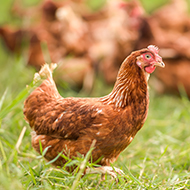
The findings could inform future research into breeding chickens that are at reduced risk of carrying Campylobacter.
Scientists identify genes that may influence resistance to Campylobacter.

Researchers at the University of Edinburgh’s Roslin Institute have identified key genes in chickens that may provide resistance to harmful bacteria responsible for food poisoning in humans.

The study published in BMC Genomics found a large number of genes in the guts of chickens that may determine whether birds are resistant to Campylobacter. 

Scientists say the findings could inform future research into breeding chickens that are at reduced risk of carrying Campylobacter, and could therefore mitigate the risk to consumers. 

“Campylobacter is present in more than half of chicken sold, representing a significant risk to consumers, and breeding poultry resistant to the bacteria is one potential way to tackle this,” commented study author Professor Mark Stevens. 

“Our research is shedding light on how the genetic make-up of chickens influences their response to the bacteria, which could inform ways to breed poultry resistant to Campylobacter and thereby improve food safety.”

Building on previous research, this study tested the effects of Campylobacter infection on chickens bred to be resistant or susceptible to the bacteria. Analysis of the chickens’ gut tissue revealed variations in a large number of the genes, including one involved in immunity.

Scientists say the difference between these genes in susceptible and resistant chickens could in part explain their response to Campylobacter.


Become a member or log in to add this story to your CPD history

FIVP announces third series of Practice Matters

News Story 1
 The Federation of Independent Veterinary practices (FIVP) has announced a third season of its podcast, Practice Matters.

Hosted by Ian Wolstenholme, series three will focus on the Competition and Markets Authority (CMA) investigation, including a discussion about some of the expected impacts on independent veterinary colleagues.

Episode one launches on 13th January with guests Drs David Reader and Scott Summers, who will draw on their research into the CMA investigation and provide insights into themes such as transparency, pricing and consumer trust.

Ian Wolstenholme said: "In its third series, we will try and hone in on what the changes will mean in reality for independent practices with advice and guidance on implementation and delivery, drawing on the experience of our own team and other experts in the profession. Hope you can join us soon!" 

Click here for more...
News Shorts
Survey seeks ruminant sector views on antimicrobial stewardship

A new survey is seeking views of people working in the UK ruminant sector on how to tackle the challenge of demonstrating responsible antibiotic stewardship.

Forming part of a wider, collaborative initiative, the results will help identify the types of data available so that challenges with data collection can be better understood and addressed.

Anyone working in the UK farming sector, including vets and farmers,is encouraged to complete the survey, which is available at app.onlinesurveys.jisc.ac.uk

