


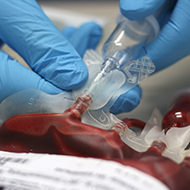
Improved measures may lessen risk of transmission through blood transfer.
A study led by the Roslin Institute has revealed that the risk of spreading variant Creutzfeldt-Jakob disease (vCJD) by blood transfer may be higher than previously thought and that further improvements to preventative measures are needed to reduce the risk of disease spread.
The 12-year study, published in the journal PLOS Pathogens, was funded by the UK’s Department of Health and Social Care. The research looked at the behaviour of vCJD in sheep, in order to estimate the spread of the disease in humans.
Scientists used sheep infected with bovine spongiform encephalopathy (BSE) by oral transmission to investigate whether and how these animals would spread disease to others through blood transfer.
The research revealed that removing white blood cells from red cells, plasma and platelets substantially reduced the risk of spread of vCJD, but did not completely prevent it.
A high number of sheep also became infected after receiving blood with detectable levels of contamination, indicating a high risk of disease spread by blood transfusion.
“If our results reflect the situation in human vCJD, then blood transfusions could contribute to spread of disease as much, or more, as eating contaminated meat,” says researcher Dr Fiona Houston.
The study authors argue that this fatal condition could be tackled more effectively by further improving protective measures, as well as further developing tests to diagnose infection in people.
Dr Khalid Salamat, research fellow at Roslin Institute and co-author of the study, said: “Current control measures appear to be effective, but risks could be further reduced by enhanced methods to remove infectious components from blood products. It is also important to develop ultrasensitive tests that can detect disease in asymptomatic blood donors.”

 Livestock keepers are being urged to stay vigilant for Bluetongue (BTV-3) following confirmation of the disease in a ewe. The case, confirmed in Staffordshire on 23 June 2026, represents the first confirmed case of infection this summer.



