
Your data on MRCVSonline
The nature of the services provided by Vision Media means that we might obtain certain information about you.
Please read our Data Protection and Privacy Policy for details.

In addition, (with your consent) some parts of our website may store a 'cookie' in your browser for the purposes of
functionality or performance monitoring.
Click here to manage your settings.
If you would like to forward this story on to a friend, simply fill in the form below and click send.

Your friend's email:
Your email:
Your name:
 
 
Send Cancel

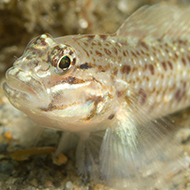
Goby fish fins may be as sensitive as human fingertips, study suggests
The team studied goby fish from Lake Michigan as they manouvered over different surfaces.

Researchers observe how goby fish use their fins to interact with different surfaces.

A new study by the University of Chicago has found that goby fish fins might be as sensitive to touch as human fingertips.

The findings, published in the Journal of Experimental Biology, suggest that human ability to detect differences between surfaces and shapes likely evolved in a distant common ancestor.

In the study, researchers set out to see if bottom-dwelling goby fish could feel different surfaces with their fins.

The team collected goby fish from Lake Michigan and filmed them in a tank as they manoeuvred over different surfaces, such as a piece of slate or plastic. They noted how the fish’s fins splayed out over each surface, similar to how a human might place their hand on a surface.

Researchers then set out to see if the fish could differentiate between fine variations, such as that of different grades of gravel. They designed a rotating wheel with ridges spaced along the edges and studied the nerve signals that the touch produced.

Study author Adam Hardy said that the nerve responses matched the pattern of the ridges, suggesting that gobies could be as sensitive to detecting coarse surface textures as the finger pads on primate.

“Primates are often held up as the gold standard in tactile sensitivity, so it was really exciting to see that fish fins exhibit a similar tactile response," he said.

He added that the gobies’ tactical sensitivity could have originated far back in evolution.

“This primate hand-like touch also suggests that the ability to detect surface differences via touch has been around a lot longer than we previously thought,” he said.


Become a member or log in to add this story to your CPD history

Defra shares new Sanitary and Phytosanitary guidance

News Story 1
 Defra has published guidance for the vet sector ahead of a proposed UK-EU Sanitary and Phytosanitary agreement.


The agreement, which will change the movement and trade of animals and related products, could see reductions in checks, paperwork and certification. As well as describing regulatory developments, the advice highlights the importance of animal ID, registration and traceability in disease control and other compliance arrangements.

The guidance can be found here. More detail is expected as negotiations progress. 

Click here for more...
News Shorts
BSAVA publishes fifth Manual of Canine and Feline Neurology

The BSAVA has published the fifth edition of its BSAVA Manual of Canine and Feline Neurology.

The new edition has been reviewed and updated, including new developments in diagnostics, therapeutic approaches and clinical decision-making. It is structured to support clinicians through diagnosis, treatment and long-term management.

The guide features five new chapters covering acute myelopathies, chronic myelopathies, emergency protocols, neurotoxicology and neuro-oncology.

It also includes over 100 videos, including demonstrations of neurological examinations, clinical presentations and diagnostic procedures.

Nicola Lloyd, publishing manager, said: "Whether you're a general practitioner seeking practical guidance, or a specialist aiming to refine your expertise, this edition remains an indispensable reference for anyone involved in the care of neurologically compromised dogs and cats."