


RVC study reveals insights on tendon disease
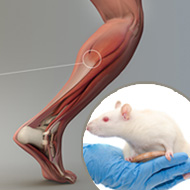
“Our results show that proteins within tendon are renewed much more rapidly than previously thought" - Dr Chavaunne Thorpe.
New treatments for tendon disease and other musculoskeletal disorders could be on the horizon thanks to research by the Royal Veterinary College (RVC).
In the study, scientists examined protein turnover rates in the tendons of rats and found that tendons are dynamic tissue with varying turnover rates of proteins.
It is hoped the discovery could eventually provide a greater understanding of how tendon disease and other connective tissue disorders can be treated.
Dr Chavaunne Thorpe, Versus Arthritis Career Development Fellow at the RVC and author of the paper, explains: “Our results show that proteins within tendon are renewed much more rapidly than previously thought, with different rates of turnover in different regions of the tendon.
“These findings will help us to understand how the rate of protein renewal in tendon is affected by ageing or injury and will allow future studies to identify potential targets for treatment of tendon disease and other prominent diseases which are caused by alterations in protein turnover rates.”
The study built on previous research that found that the interfascicular matrix - the main load-bearing structures of the tendon - allows sliding between fascicles, meaning that it may be prone to damage.
In this latest study, scientists sought to establish if the turnover rate of proteins in the interfascicular matrix is greater than in the fascicles, which would help repair any damage. The results are published in the journal Structural Biology and Molecular Biophysics.
'The discovery challenges long-held beliefs that almost no protein turnover occurs in tendon and instead, provides the first step in understanding how altered protein turnover contributes to the development of tendon disease,' the researchers note.
'Additionally, with alterations in protein turnover rates contributing to other musculoskeletal and connective tissue diseases, this study will also help target future research into how these diseases can most effectively be treated.'


 The BSAVA has opened submissions for the BSAVA Clinical Research Abstracts 2026.



