


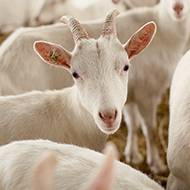
DAERA reports first-ever confirmed case of the disease in the country
Northern Ireland’s (NI) chief veterinary officer Dr Robert Huey has called for vigilance after officials confirmed the first case of caprine arthritis encephalitis (CAP) goat disease in the country.
On Thursday (21 November) NI’s Department of Agriculture, Environment and Rural Affairs (DAERA), confirmed the disease in a goat on a holding in County Londonderry. CAE is a lentivirus closely related to Maedi Visna virus in sheep and is notifiable in NI.
“This is the first-ever confirmation of the CAE virus in NI, other than those recorded at post-import checks,” explained Dr Huey. “The virus is found worldwide, but until this detection, the disease has never been recorded on the island of Ireland.”
An initial assessment of the infected goat, which had been imported from Great Britain (GB) concluded that the most likely source of infection was at the herd of origin in GB. The animals on the premises were slaughtered under DAERA supervision and movements are being restricted.
Dr Huey said that keeping the disease out of Northern Ireland is vital for animal health and urged farmers to carry out effective biosecurity measures.
“Keeping NI free from animal diseases, in so far as possible, is vital to maintain our high standards of animal health and underpin the trading status of NI agri-food,” Dr Huey added.
“While CAE certainly adversely affects the health of goats due to pain and disability, the presence of this disease could potentially have serious economic implications. The economic impact of CAE includes reduced productivity, early culling, paralysis and death in kids, gradual drop in milk yield due to mastitis and potential damage to export sales.”
He continued: “It is essential that we continue to take the necessary steps to protect our animals, industry, international trade and the wider economy. I would strongly encourage farmers to follow DAERA guidance on responsible sourcing of animals and to be aware of the significant risks and the potentially adverse consequences, both for themselves and for the industry of a disease incursion.”
Clinical signs of CAE include arthritis in the older animal and a lowered mid yield owing to mastitis. Most goats contract the disease at a young age and continue to test positive for life. Transmission is primarily by milk or colostrum.
Other clinical signs include poor coat conditions, hard udder syndrome, paralysis in kids’ legs and hair loss.


 Eligible members of BEVA will be able to vote for their Council team until Monday, 17 August 2026. Members will have received an election email on 17 July.



