
Your data on MRCVSonline
The nature of the services provided by Vision Media means that we might obtain certain information about you.
Please read our Data Protection and Privacy Policy for details.

In addition, (with your consent) some parts of our website may store a 'cookie' in your browser for the purposes of
functionality or performance monitoring.
Click here to manage your settings.
If you would like to forward this story on to a friend, simply fill in the form below and click send.

Your friend's email:
Your email:
Your name:
 
 
Send Cancel

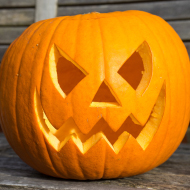
Feed leftover pumpkin to animals, urges RSPCA
Lots of animals love to eat pumpkin.

Public urged to give their carvings to garden wildlife

The RSPCA is urging people not to throw away their leftover pumpkin carvings but to give them to wildlife and other animals instead.

According to research by the charity Hubbub, an estimated 15 million pumpkins are carved by UK households every year and not eaten - the equivalent of a bowl of pumpkin soup for everyone in the country.

Many animals can also eat pumpkin, and the RSPCA is calling on anyone who has carved a pumpkin not to throw the carcass away, but to feed it to garden visitors.

"Lots of animals - including wildlife - love to eat pumpkin; so we’re urging people not to waste them but to feed them to the wildlife in their gardens or perhaps even to their pets,” said an RSPCA spokesperson.
 
"Squirrels, foxes, badgers and birds all enjoy them, so people could leave chopped up pumpkin outside in dishes for wild animals to eat if they choose. Wildlife can struggle to find food this time of year so some chunks of tasty pumpkin could be very welcome.”

The RSPCA advises that, once the spooky season is over, pumpkin carvers should ensure the fruit is appropriate to feed to animals.

“Before feeding leftover pumpkin to any animals, however, it's obviously important to remove tea light holders and any traces of candle wax,” the spokesperson added.
 
“It is always worth checking the inside flesh of the pumpkin too - to ensure it isn't mushy, mouldy, scorched or burned, as this may make it unsuitable for animals - although it would still make good compost!"


Become a member or log in to add this story to your CPD history

Defra shares new Sanitary and Phytosanitary guidance

News Story 1
 Defra has published guidance for the vet sector ahead of a proposed UK-EU Sanitary and Phytosanitary agreement.


The agreement, which will change the movement and trade of animals and related products, could see reductions in checks, paperwork and certification. As well as describing regulatory developments, the advice highlights the importance of animal ID, registration and traceability in disease control and other compliance arrangements.

The guidance can be found here. More detail is expected as negotiations progress. 

Click here for more...
News Shorts
Lords Committee opens Pet Parasite Medication inquiry

The House of Lords Environment and Climate Change Committee will launch its inquiry into Pet Parasite Medication (PPM) on Wednesday (3 June).

Focusing on treatments containing fipronil and imidacloprid, the inquiry will seek to understand distribution pathways and the impacts of PPM use and non-use on biodiversity and human health. It will also cover current regulation, monitoring, and the potential implications for pets and their owners.

The committee will hear evidence from environmental non-governmental organisations and research institutes. The public can follow the proceedings live on Parliament TV or in person in the Palace of Westminster.