


Cat owners ‘have an important role’ in reversing declines
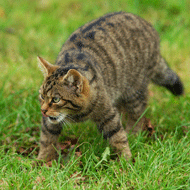
There is no longer a viable wildcat population living in Scotland, according to a review of the evidence by members of the IUCN.
Previous studies have shown that hybridisation - where wildcats breed with feral or domestic cats - is a major threat to the species. Limited food sources and persecution are thought to have prompted the few remaining wildcats to breed with domestic cats.
Steps are now underway to bring the species back from the brink, including a potential release programme of captive-bred animals and a National Wildlife Reintroduction Centre.
Scottish Natural Heritage said a national conversation is needed on how to manage domestic and feral cat populations.
“The public will have an important role in helping minimise future hybridisation,” said head of policy and advice, Eileen Stuart. “Responsible cat ownership - including microchipping, neutering and vaccinations - is one way we can help reduce the devastating effects on wildcats.”
Dr Andrew Kitchener, steering group chair for Scottish Wildcat Action (SWA), added: “We now have the strongest and most reliable evidence to date that wildcats are in a more endangered state than previously understood.
“While we believe there are wildcats remaining in the wild in Scotland, there are no longer enough to ensure their continued survival as viable populations. We can now plan the essential next steps to give the wildcat a sustainable future.”
SWA’s project partner, the Royal Zoological Society of Scotland, is working with a range of organisations on a series of measures to reverse the declines.
Scottish cabinet secretary Roseanna Cunningham said she will “consider every possible action the Scottish Government can take to save [the species]”.
Image by Peter Trimming/Wikimedia Commons/CC BY 2.0


 Veterinary practices are being urged to help owners safely dispose of any unused and expired pet medicines - not just antibiotics - during November's Animal Medicines Amnesty.



