


New BCVA president takes up the reins
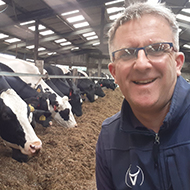
Colin Mason (C) British Cattle Veterinary Association.
Colin Mason has officially become the president of the British Cattle Veterinary Association (BCVA), after outgoing president Elizabeth Berry handed over the mantle at the BCVA AGM.
Colin, who currently works as a veterinary investigation officer and centre manager at Scotland Rural College's (SRUC) Disease Surveillance Centre, qualified from The Royal (Dick) School of Veterinary Studies in 1995.
Discussing the cattle vet profession, Colin said: “Farm vets have significant opportunities and increasing relevance in today’s world.
“Food security and the cost of food, alongside climate change and sustainability means animal production for food has never been under greater scrutiny.
Whilst serving on the BCVA Board, Colin has taken on a number of duties, including representing the association on the Ruminant Health and Welfare Group and the Animal Health and Welfare Pathway veterinary steering group.
Colin has also been the honorary treasurer for BCVA, and has now taken up the role of president, believing the current moment to be full of significant opportunity for the farm vet profession.
“We have a massively important role to play in ensuring that food animal production is sustainable in every possible way,” Colin added.
“If we are going to feed plant material to animals to then produce food the process needs to be as efficient as possible, welfare friendly with production systems that are acceptable to the consumer and systems that limit environmental impact and promote biodiversity.
“Happy, healthy, productive cows are central to this the farm vet can make a real difference.
“For the profession we have the challenges of delivering on these significant demands with the background of reduced staff availability and retention.
“This year will see the first steps to implementing post Brexit agricultural support in England through the Animal Health & Welfare Pathway, with further changes developing and proposed in the devolved nations.
“This presents an opportunity for farm animal vets which are central to this work and BCVA is and will work with DEFRA other veterinary bodies and practitioners to help deliver this.
“There is also exciting new opportunities to treat lameness with the new to farmer training in foot health delivered by vets and foot trimmers with the LANTRA approved programme, which offer a great opportunity to continue to make a difference.
“All these important subjects and initiatives have featured here at BCVA Congress this year, and in future work that BCVA does for its members.”


 Companies marketing medicines for small pets exempt from authorisation must submit their annual return to the Veterinary Medicines Directorate (VMD) by 30 November 2026.



