
Your data on MRCVSonline
The nature of the services provided by Vision Media means that we might obtain certain information about you.
Please read our Data Protection and Privacy Policy for details.

In addition, (with your consent) some parts of our website may store a 'cookie' in your browser for the purposes of
functionality or performance monitoring.
Click here to manage your settings.
If you would like to forward this story on to a friend, simply fill in the form below and click send.

Your friend's email:
Your email:
Your name:
 
 
Send Cancel

Land policies should address disease risk, study warns
The study specifically examined the possible implications for the spread of bovine tuberculosis.

New model assesses how woodland-planting subsidies might affect deer populations.

The potential spread of infection amongst wildlife and livestock should be considered when expanding woodland, new research suggests.

The study by the Roslin Institute suggests that careful planning is vital when designing environmental policies, such as woodland management schemes, to control the risk of disease transmission.

Researchers developed an economic data model to explore how woodland-planting subsidies might affect deer populations, landscapes, and the proximity of wildlife to cattle farms.

Focusing on south-west Scotland, the team modelled a range of woodland expansion scenarios and found that connectivity between deer habitat and cattle grazing could increase by up to 35 per cent, possibly accelerating disease transmission.

Published in the Journal of Environmental Management, the study specifically examined the possible implications for the spread of bovine tuberculosis. However, the researchers note that the model could be applied to any infectious disease that passes between livestock and wildlife.

Dr Chris Banks, a core scientist at The Roslin Institute, said: “Woodland expansion brings many benefits, including biodiversity gains and carbon sequestration, but it is important to understand any unintended consequences for livestock disease risk.

“Our work suggests there is value in considering where woodland is planted, so that environmental goals can be achieved while minimising the potential for increased contact between wildlife and farmed cattle.”

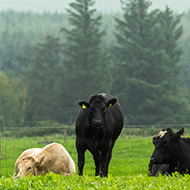
Image (C) Alex Konon/Shutterstock.com

Become a member or log in to add this story to your CPD history

Vets launch new podcast for pet owners

News Story 1
 Two independent vets have launched a podcast to help owners strengthen their bond with pets. Dr Maggie Roberts and Dr Vanessa Howie, who have worked in both veterinary practice and major charities, are keen to use their experience to enable people to give pets a better life.

The venture, called Vets Talking Pets, provides advice and information on a range of topics, including how to select a suitable pet, where to obtain them and how to get the best out of your vet. Maggie and Vanessa will also discuss sensitive subjects, including end-of-life care, raw food diets and the cost of veterinary care.

The podcast can be found on all the usual podcast sites, including Podbean, Apple, Amazon Music and YouTube. 

Click here for more...
News Shorts
BSAVA publishes fifth Manual of Canine and Feline Neurology

The BSAVA has published the fifth edition of its BSAVA Manual of Canine and Feline Neurology.

The new edition has been reviewed and updated, including new developments in diagnostics, therapeutic approaches and clinical decision-making. It is structured to support clinicians through diagnosis, treatment and long-term management.

The guide features five new chapters covering acute myelopathies, chronic myelopathies, emergency protocols, neurotoxicology and neuro-oncology.

It also includes over 100 videos, including demonstrations of neurological examinations, clinical presentations and diagnostic procedures.

Nicola Lloyd, publishing manager, said: "Whether you're a general practitioner seeking practical guidance, or a specialist aiming to refine your expertise, this edition remains an indispensable reference for anyone involved in the care of neurologically compromised dogs and cats."


