
Your data on MRCVSonline
The nature of the services provided by Vision Media means that we might obtain certain information about you.
Please read our Data Protection and Privacy Policy for details.

In addition, (with your consent) some parts of our website may store a 'cookie' in your browser for the purposes of
functionality or performance monitoring.
Click here to manage your settings.
If you would like to forward this story on to a friend, simply fill in the form below and click send.

Your friend's email:
Your email:
Your name:
 
 
Send Cancel

Vigilance urged after rise in equine influenza cases
EIDS is urging horse owners and their veterinary surgeons to be vigilant for the emergence of signs of respiratory disease.

Five cases involved infection from recently imported horses.

Horse owners have been reminded to be vigilant and take proactive measures following a rise in equine influenza (EI) outbreaks.

Equine Infectious Disease Surveillance (EIDS), a Cambridge University-based service that monitors and controls equine infectious diseases, has confirmed outbreaks on premises in six separate counties of England since the beginning of April.

In addition to reports from Berkshire, Hampshire, Kent, Lincolnshire and North Yorkshire, EIDS is aware of another confirmed outbreak in the East of England.

An EIDS spokesperson noted that the outbreaks reported in the first 10 days of April stand in stark contrast to the first quarter of 2026, when only two EI outbreaks were reported across all of the UK.

Five of the current cases involved EI infection from recently imported horses, while two of the cases were confirmed in horses that had been vaccinated.

The spokesperson added: ‘EIDS therefore urges horse owners and their veterinary surgeons to be vigilant for the emergence of signs of respiratory disease (pyrexia, inappetence, coughing and nasal discharge) among animals under their care.

‘This is particularly true among recently arrived and non-vaccinated animals, although signs in vaccinated horses should be taken seriously and also be investigated. Diagnosis relies on upper respiratory tract samples being collected and tested by either conventional laboratory methods (qPCR) or point-of-care testing at the practice (LAMP, iiPCR) for presence of viral RNA.

‘If you have a positive laboratory or point of care test result for EI, please do take the trouble to report this to EIDS via the online disease reporting platform here; just register on the system with your email and away you go!’

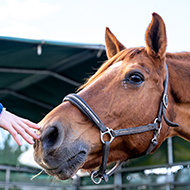
Image (C) WRCreatives/Shutterstock.

Become a member or log in to add this story to your CPD history

Defra shares new Sanitary and Phytosanitary guidance

News Story 1
 Defra has published guidance for the vet sector ahead of a proposed UK-EU Sanitary and Phytosanitary agreement.


The agreement, which will change the movement and trade of animals and related products, could see reductions in checks, paperwork and certification. As well as describing regulatory developments, the advice highlights the importance of animal ID, registration and traceability in disease control and other compliance arrangements.

The guidance can be found here. More detail is expected as negotiations progress. 

Click here for more...
News Shorts
BSAVA publishes fifth Manual of Canine and Feline Neurology

The BSAVA has published the fifth edition of its BSAVA Manual of Canine and Feline Neurology.

The new edition has been reviewed and updated, including new developments in diagnostics, therapeutic approaches and clinical decision-making. It is structured to support clinicians through diagnosis, treatment and long-term management.

The guide features five new chapters covering acute myelopathies, chronic myelopathies, emergency protocols, neurotoxicology and neuro-oncology.

It also includes over 100 videos, including demonstrations of neurological examinations, clinical presentations and diagnostic procedures.

Nicola Lloyd, publishing manager, said: "Whether you're a general practitioner seeking practical guidance, or a specialist aiming to refine your expertise, this edition remains an indispensable reference for anyone involved in the care of neurologically compromised dogs and cats."
