


Vets retrieve fish hook from spaniel’s stomach
Vets were able to use an endoscope to extract the hook.
Veterinary surgeons have successfully removed a fish hook from a springer spaniel’s stomach, without using surgery.
The specialist team from the Royal (Dick) School of Veterinary Surgeons utilised an endoscope to carefully retrieve the three-pronged hook.
Three-year-old Chip had been on a loch-side walk in Dumfriesshire when he found the fishing bait discarded on the ground. Before his owners could react, Chip had grabbed the hook and swallowed it.
The three-year-old began coughing and had blood in his mouth, with an X-ray revealing the fish hook lodged in his oesophagus.
Chip was urgently referred to the School’s Hospital for Small Animals. The Internal Medicine team planned to use an endoscope to remove the hook, rather than opting for surgery.
Veterinary surgeons discovered that the hook had slipped into Chip’s stomach, which would make its removal more complex. However, they found that the procedure was still possible with the use of a protecting cup.
The Soft Tissue Surgery team was also called in to suture a laceration on the springer spaniel’s tongue.
Chip recovered quickly, and was ready for discharge the following day.
Such cases occur throughout the year, with the Internal Medicine treating two other dogs for fish hook injuries that same month. One of these cases involved two fishing hooks – one was embedded in the lip and the other was swallowed.
Fish hooks rarely ass safely, since the barbs can anchor into soft tissue. This can cause severe trauma to the mouth, oesophagus, stomach or intestines. Fishing line can cause further trauma, ripping into tissue if tension is applied.
The team says that veterinary surgeons should never pull on or tug a fishing line, unless the hook is fully visible within the oral cavity and can be locally retrieved.
Cutting the line prematurely may allow the hook to migrate into the stomach or intestines, potentially ruling out endoscopic removal and necessitating surgery.
They also recommend taking cervical, thoracic and abdominal radiographs, as well as ultrasounds if available. Patients should be referred urgently for an endoscopic assessment.
During transport, the line should be left intact and secured to a neck collar, protected by an Elizabethan collar. This will prevent migration during travel.
Vets should also administer pain relief and mild sedation.
Marisa Ferreira, from the Internal Medicine Service, said: “Although dogs who have swallowed fish hooks often go on to make a full recovery, success depends on rapid recognition, appropriate first response, and timely definitive management.
“With greater awareness among dog owners, veterinary teams, and the fishing community, many fish hook injuries are preventable.”
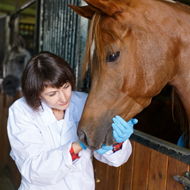
Image © The Royal (Dick) School of Veterinary Surgeons

 The latest



