Your data on MRCVSonline
The nature of the services provided by Vision Media means that we might obtain certain information about you.
Please read our Data Protection and Privacy Policy for details.

In addition, (with your consent) some parts of our website may store a 'cookie' in your browser for the purposes of
functionality or performance monitoring.
Click here to manage your settings.
If you would like to forward this story on to a friend, simply fill in the form below and click send.

Your friend's email:
Your email:
Your name:
 
 
Send Cancel

Moorland grazing reduces methane emissions, study finds
The study measured greenhouse gas emissions from two breeds of ewes grazing across the Yorkshire Dales National Park.

The results highlight the importance of upland sheep farming. 

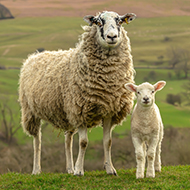
Sheep grazing on moorland produce lower levels of methane and carbon dioxide than those grazing improved grassland, according to new research.

The study, supported by the National Sheep Association, measured greenhouse gas emissions from native Swaledale ewes and commercial Texel-cross ewes grazing different forage types across the Yorkshire Dales National Park.

Results showed that native Swaledale ewes produced less methane overall than Texel-cross ewes, largely due to their smaller body size. When methane emissions were adjusted for liveweight, however, there was little difference between the two breeds. 

Both breeds produced more daily methane emissions when grazing improved grassland compared to herb-rich grassland or moorland forage.

The study also revealed that native Swaledale ewes produced less carbon dioxide than crossbred ewes, even after adjusting for weight. For both breeds, carbon dioxide emissions were higher when grazing improved and herb-rich grasslands than when grazing moorland.

NSA Project Manager Nicola Noble explained: “This study provides crucial evidence to help demonstrate the current and future importance of sustainable upland sheep farming. It is great to finally be able to share these results after almost a year and a half’s work on this project.”

The findings form part of Forage for CH4nge, an Innovate UK-funded research project supported by the NSA. The project brings together farmers and scientists to better understand how forage type, landscape and traditional sheep breeds influence the environmental footprint of upland sheep farming.

Image (C) Serenity Images23/Shutterstock.com

Become a member or log in to add this story to your CPD history

FIVP announces third series of Practice Matters

News Story 1
 The Federation of Independent Veterinary Practices (FIVP) has announced a third season of its podcast, Practice Matters.


Hosted by Ian Wolstenholme, series three will focus on the Competition and Markets Authority (CMA) investigation, including a discussion about some of the expected impacts on independent veterinary colleagues.

Episode one launches on 13th January with guests Drs David Reader and Scott Summers, who will draw on their research into the CMA investigation and provide insights into themes such as transparency, pricing and consumer trust.

Ian Wolstenholme said: "In its third series, we will try and hone in on what the changes will mean in reality for independent practices with advice and guidance on implementation and delivery, drawing on the experience of our own team and other experts in the profession. Hope you can join us soon!" 

Click here for more...
News Shorts
Survey seeks ruminant sector views on antimicrobial stewardship

A new survey is seeking views of people working in the UK ruminant sector on how to tackle the challenge of demonstrating responsible antibiotic stewardship.

Forming part of a wider, collaborative initiative, the results will help identify the types of data available so that challenges with data collection can be better understood and addressed.

Anyone working in the UK farming sector, including vets and farmers,is encouraged to complete the survey, which is available at app.onlinesurveys.jisc.ac.uk