


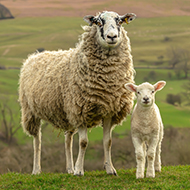
The results highlight the importance of upland sheep farming.
Sheep grazing on moorland produce lower levels of methane and carbon dioxide than those grazing improved grassland, according to new research.
The study, supported by the National Sheep Association, measured greenhouse gas emissions from native Swaledale ewes and commercial Texel-cross ewes grazing different forage types across the Yorkshire Dales National Park.
Results showed that native Swaledale ewes produced less methane overall than Texel-cross ewes, largely due to their smaller body size. When methane emissions were adjusted for liveweight, however, there was little difference between the two breeds.
Both breeds produced more daily methane emissions when grazing improved grassland compared to herb-rich grassland or moorland forage.
The study also revealed that native Swaledale ewes produced less carbon dioxide than crossbred ewes, even after adjusting for weight. For both breeds, carbon dioxide emissions were higher when grazing improved and herb-rich grasslands than when grazing moorland.
NSA Project Manager Nicola Noble explained: “This study provides crucial evidence to help demonstrate the current and future importance of sustainable upland sheep farming. It is great to finally be able to share these results after almost a year and a half’s work on this project.”
The findings form part of Forage for CH4nge, an Innovate UK-funded research project supported by the NSA. The project brings together farmers and scientists to better understand how forage type, landscape and traditional sheep breeds influence the environmental footprint of upland sheep farming.
Image (C) Serenity Images23/Shutterstock.com


 The Federation of Independent Veterinary Practices (FIVP) has announced a third season of its podcast, Practice Matters.



