


Researchers identify link to reduced blood supply.
Researchers have identified a link between reduced blood supply in ageing horses and higher risk of tendon injuries.
A study led by researchers at the Royal Veterinary College provides vital insight into why older horses and people are more prone to tendon injuries, and why these injuries heal more slowly and less effectively.
The research, published in Aging Cell, will help vets and trainers identify horses at higher risk of injury and select the most appropriate treatment and rehabilitation strategies.
Dr Nodoka Iwasaki, Postdoctoral Researcher at the RVC, said: “We found that older tendons lose many of their larger blood vessels, which are crucial for repair and recovery.
“This helps explain why older horses are more prone to tendon injuries and why these injuries heal more slowly. We are now exploring ways to prevent this age-related decline, with the aim of improving outcomes for older horses diagnosed with tendon injury”.
In the study, the team used advanced 3D imaging to capture detailed images of tendon tissue from young and older horses. Specifically, the examined blood vessels within the superficial digital flexor tendon (SDFT), similar to the human Achilles tendon and one commonly injured in athletic horses.
The images revealed a 70 per cent reduction in overall vascular volume in older horses, meaning there was far less blood present within the tendon’s blood vessels. They also revealed a 30 per cent decrease in vessel diameter and a 74 per cent reduction in blood vessels overall, compared to younger horses.
This means older tendons receive far less blood flow, making them more vulnerable to damage and will be slower to heal.
Chavaunne Thorpe, a lecturer in basic sciences at the RVC’s department of comparative biomedical sciences, said: “Using high-resolution 3D imaging techniques, we have shown that the blood supply to the injury prone superficial digital flexor tendon is dramatically altered as horses age, with a loss of larger blood vessels.
“This may explain why older horses are more at risk of tendon injury, as a lower blood supply means their tendons won't be able to heal as well. We are currently developing methods to prevent this age-related decline, which, if successful, may improve prognosis in older horses diagnosed with tendon injury."
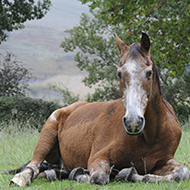
Image (C) Wolf Avni/Shutterstock.


 The BSAVA has opened submissions for the BSAVA Clinical Research Abstracts 2026.



