


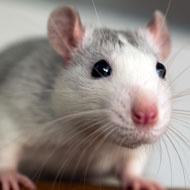
The research has important implications for refining animal welfare practices.
Tickling has been shown to produce a positive emotional response in laboratory rats. Now, new research, led by Scotland’s Rural College (SRUC), has revealed that juvenile male rats prefer a rougher style of play than females.
In the study, SRUC research fellow Dr Vincent Bombail and Professor Alistair Lawrence at the Animal Behaviour and Welfare Group explored how juvenile rats of both sexes respond to different styles of tickling.
Dr Bombail said: “Our results confirm that tickling is generally rewarding for both sexes, but males seem to prefer a rougher style of play, with more vigorous stimulation. Interestingly, female rats responded more positively when pinning was minimised, suggesting a need for sex-specific refinements in handling protocols.”
In the study, the team assessed whether reducing the intensity of tickling, particularly the use of “pinning” (placing rats on their back and tickling their belly), and introducing more flexible interactions, would reduce individual variation in emotional response.
The research has important implications for refining animal welfare practices, particularly for laboratory animals, and for understanding the biology of positive affective states (animal happiness).
Dr Bombail continued: “This isn’t just about tickling rats, it’s about using science to refine how we interact with animals in our care. By understanding sex-specific preferences, we can design enrichment and handling practices that are truly beneficial for all animals.”
The study, "Refinement of tickling protocols in male and female juvenile rats" is published in F1000Research.
Image (C) Bilanol/Shutterstock.com.


 Companies marketing medicines for small pets exempt from authorisation must submit their annual return to the Veterinary Medicines Directorate (VMD) by 30 November 2026.



