


The discovery could lead to faster, non-invasive diagnosis of the condition.
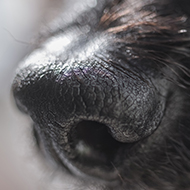
Trained detection dogs can identify the odour of people with Parkinson's disease with high levels of accuracy, according to new research.
The study by the University of Bristol in collaboration with Medical Detection dogs taught two dogs to distinguish between sebum swabs from people with and without Parkinson's disease.
A double-blind trial revealed the dogs could correctly identify Parkinson's in up to 80 per cent of cases, and rule out the disease in up to 98 per cent. Moreover, the dogs were able to detect it in samples from patients with other health conditions.
As there is no definitive test for Parkinson's disease, researchers believe the identification of potential biomarkers could assist with diagnosis and timely intervention.
Claire Guest, Medical Detection Dogs CEO and chief scientific officer, said: “We are extremely proud to say that once again, dogs can very accurately detect disease.
“There is currently no early test for Parkinson’s disease and symptoms may start up to 20 years before they become visible and persistent leading to a confirmed diagnosis.
“Timely diagnosis is key as subsequent treatment could slow down the progression of the disease and reduce the intensity of symptoms.”
The dogs were trained over several weeks on over 200 odour samples from individuals who had tested positive for Parkinson's Disease, as well as control samples from people without the disease.
Samples were presented to the dogs on a stand system, and the dogs were rewarded for correctly identifying a positive sample and for ignoring a negative sample.
In the double-blind test, only a computer knew where the correct samples were. Each line was presented to the dogs in reverse order, so the samples for which no decision was made were re-presented.
Any unsearchered samples were gathered in new lines, until a decision had been reached for all lines.
Nicola Rooney, associate Professor at Bristol Veterinary School and lead author, commented: “Identifying diagnostic biomarkers of PD, particularly those that may predict development or help diagnose disease earlier is the subject of much ongoing research. The dogs in this study achieved high sensitivity and specificity and showed there is an olfactory signature distinct to patients with the disease.
“Sensitivity levels of 70% and 80% are well above chance and I believe that dogs could help us to develop a quick non-invasive and cost-effective method to identify patients with Parkinson’s disease.”
The study, Trained dogs can detect the odour of Parkinson's Disease, is published in the Journal of Parkinson's Disease.
Image © Shutterstock


 Companies marketing medicines for small pets exempt from authorisation must submit their annual return to the Veterinary Medicines Directorate (VMD) by 30 November 2026.



