
Your data on MRCVSonline
The nature of the services provided by Vision Media means that we might obtain certain information about you.
Please read our Data Protection and Privacy Policy for details.

In addition, (with your consent) some parts of our website may store a 'cookie' in your browser for the purposes of
functionality or performance monitoring.
Click here to manage your settings.
If you would like to forward this story on to a friend, simply fill in the form below and click send.

Your friend's email:
Your email:
Your name:
 
 
Send Cancel

Electronic ID for cattle to be made mandatory
"This is a significant milestone in modernising how we manage cattle health" - Baroness Hayman.

Defra announces changes to cattle identification, registration, and reporting.

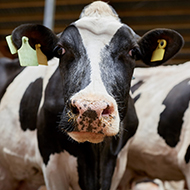
All calves must be fitted with electronic identification tags from summer 2027 following new measures announced by Defra.

Under the changes revealed on Monday (2 June) also include a new cattle movement reporting system to simplify existing regulations and support the livestock industry. 

It comes as the government announced a £200 million investment into the UK’s research and laboratory testing facilities at Weybridge to boost production against animal disease.

Biosecurity Minister, Baroness Hayman said: "This is a significant milestone in modernising how we manage cattle health, welfare and traceability in England. These reforms strike the right balance in supporting farmers with clearer, simpler rules while helping the sector strengthen its productivity, resilience and global competitiveness." 

Under the requirements, all new-born calves from summer 2027 will need to be fitted with low frequency eID tags. The tags will enable animals to be scanned when they are moved, instead of a visual read and manual input of the tag number.

Experts hope that electronic cattle traceability will strengthen the UK’s ability to prevent, detect and respond to animal disease outbreaks, protecting farmers and the rural economy.

UK chief veterinary officer Dr. Christine Middlemiss said: "Electronic identification is a game-changer for disease traceability. It allows for faster, more accurate tracking of cattle movements, which is crucial in responding to outbreaks and maintaining our high biosecurity standards.  
 
“This shift puts England in step with best global practice and today’s early confirmation will provide the livestock industry the clarity it needs to begin preparing now — ensuring that the right tags, readers and systems are available at scale ahead of rollout.”

Image (C) Shutterstock.

Become a member or log in to add this story to your CPD history

Greyhound Board announces change to vaccination guidance

News Story 1
 The Greyhound Board of Great Britain has published new vaccination guidance, with all greyhounds registered from 1 January, 2027 required to have the L4 leptospirosis vaccination, rather than L2.

The change comes in response to the reduced availability of the 'L2' Leptospirosis vaccine across the UK, and aims to support best biosecurity practice across the racing greyhound population.

GBGB veterinary director Simon Gower, said "While rare, Leptospirosis is a serious infectious disease that can affect both dogs and humans, so it is vital that we offer our greyhounds the broadest possible protection.  

Click here for more...
News Shorts
Free webinar explores congenital heart disease in dogs

A free webinar is to provide veterinary professionals, dog breeders and pet owners an new insights into congenital heart disease.

Chris Linney, a cardiology specialist and Veterinary Cardiovascular Society (VSC) member, will present the webinar from 7.00pm to 8.30pm on Wednesday, 12 November.

Dr Linney will explore the types, causes and clinical presentation of congenital heart conditions. This will include diagnostic approaches, treatment pathways and emerging research opportunities.

The session is the third to be organised by The Kennel Club, with the VCS, following an introductory webinar and a talk on acquired heart disease. Dr Linney's webinar consists of a one-hour presentation, followed by a 30-minute question and answer session.

Dr Linney said: "This webinar will be an opportunity to deepen understanding - not just of the diseases themselves, but of how breeders, vets and owners can work together to support affected dogs and improve outcomes for future generations."

Click here to register for the webinar.


