


Findings may help researchers understand aggression in humans.
US researchers have used an innovative brain mapping technique to reveal how hormones influence ‘mean girl’ behaviour in lemurs.
Scientists at Duke University, North Carolina, studied seven lemur species, noting which ones had domineering females and which ones had a more harmonious relationship between the sexes.
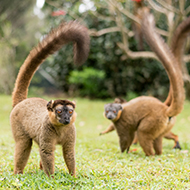
In female-dominant species, like blue-eyed black lemurs, females rely on aggression against males to get first dibs on food and resting places. Other species, such as collared lemurs, are more peaceful and egalitarian, with males and females sharing equal status.
Using an imaging technique called autoradiography, researchers examined the brain tissues of lemurs who had died of natural causes.
They found the “love hormone” oxytocin was responsible for the behavioural differences, noting the more recently evolved egalitarian species had more oxytocin receptors than the others. This essentially gives them more targets for oxytocin.
Interestingly, the key difference was the amygdala, a part of the brain linked to fear, anxiety and anger. This pattern was true for both sexes, suggesting that egalitarian species are less aggressive towards others overall.
It is hoped the findings will help researchers understand aggression, personality disorders and autism in humans. Looking ahead, the team plans to examine links between hormones and social behaviour behaviour in lemurs.
First author Allie Schrock commented: “There's a lot more that we can learn from lemurs about how the brain regulates behavior.”
The study, Neuropeptide Receptor Distributions in Male and Female Eulemur Vary Between Female-Dominant and Egalitarian Species, is published in Biology Letters.
Image (C) Shutterstock.


 Two independent vets have launched a podcast to help owners strengthen their bond with pets. Dr Maggie Roberts and Dr Vanessa Howie, who have worked in both veterinary practice and major charities, are keen to use their experience to enable people to give pets a better life.



