
Your data on MRCVSonline
The nature of the services provided by Vision Media means that we might obtain certain information about you.
Please read our Data Protection and Privacy Policy for details.

In addition, (with your consent) some parts of our website may store a 'cookie' in your browser for the purposes of
functionality or performance monitoring.
Click here to manage your settings.
If you would like to forward this story on to a friend, simply fill in the form below and click send.

Your friend's email:
Your email:
Your name:
 
 
Send Cancel

Vets urged to use tool to check nematodirus risk
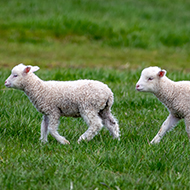
Lambs born from mid-February onwards are currently at the highest risk, according to the forecast.

Temperature fluctuations are making hatching difficult to predict, says SCOPS.

Vets and farmers are once again being advised to make use of the Sustainable Control of Parasites in Sheep (SCOPS) Group forecast tool to identify when lambs might be susceptible to nematodirus.

Independent sheep consultant Nerys Wright says: “The SCOPS Nematodirus Forecast is an essential tool due to the role of temperature on the larvae of this worm species. This year in particular we have seen some significant fluctuations in temperatures, making the time of hatching difficult to predict without the forecast. 

“Currently, the map indicates there are some very high risk areas, as marked by black dots, which is earlier than in previous years. Lambs born from mid-February onwards that are old enough to be grazing are currently at the highest risk. Most March-born lambs are currently too young to be affected.”

Analysing forecast data from 2019 to 2024, SCOPS show how temperature fluctuations influence the timing of the nematodirus hatch. Their study reveals variations in the very high-rise periods for two weather stations, one in England and the other in Scotland.

Dr Wright adds: “The range between the earliest and latest onset of very high-risk varies by six to seven weeks over a five-year period, highlighting that treatment at set times is unlikely to be effective. 

"Neither can we risk a wait-and-see approach because when an outbreak occurs, as Nematodirus can rapidly cause severe harm or even death to a large number of lambs. The forecast helps to pinpoint the timing of any treatment given.” 

The SCOPS forecast uses local weather conditions to predict the hatching of nematodirus larvae. The interactive map is updated every day with data from 140 weather stations to provide a guide to the risk level throughout the UK.

Image (C) Shutterstock.

Become a member or log in to add this story to your CPD history

Defra shares new Sanitary and Phytosanitary guidance

News Story 1
 Defra has published guidance for the vet sector ahead of a proposed UK-EU Sanitary and Phytosanitary agreement.


The agreement, which will change the movement and trade of animals and related products, could see reductions in checks, paperwork and certification. As well as describing regulatory developments, the advice highlights the importance of animal ID, registration and traceability in disease control and other compliance arrangements.

The guidance can be found here. More detail is expected as negotiations progress. 

Click here for more...
News Shorts
BSAVA publishes fifth Manual of Canine and Feline Neurology

The BSAVA has published the fifth edition of its BSAVA Manual of Canine and Feline Neurology.

The new edition has been reviewed and updated, including new developments in diagnostics, therapeutic approaches and clinical decision-making. It is structured to support clinicians through diagnosis, treatment and long-term management.

The guide features five new chapters covering acute myelopathies, chronic myelopathies, emergency protocols, neurotoxicology and neuro-oncology.

It also includes over 100 videos, including demonstrations of neurological examinations, clinical presentations and diagnostic procedures.

Nicola Lloyd, publishing manager, said: "Whether you're a general practitioner seeking practical guidance, or a specialist aiming to refine your expertise, this edition remains an indispensable reference for anyone involved in the care of neurologically compromised dogs and cats."
