


Third of UK calves get bovine respiratory disease, study finds
Subclinical pneumonia does not show any clinical signs.
A new study from the Royal Veterinary College (RVC) has revealed that nearly a third of UK calves will experience bovine respiratory disease and subclinical pneumonia.
Bovine respiratory disease is recognised as a leading cause of disease in pre-weaned calves, resulting in increased antibiotic use among the animals.
Diagnosis of the condition is considered challenging, traditionally involving the assessment of clinical signs. Veterinary practitioners often use the Wisconsin Respiratory Score, diagnosing the disease based on signs including cough, nasal or ocular discharge.
However researchers suggest that more precise techniques, such as thoracic ultrasound, could diagnose the condition with more precision.
The research team, led by European veterinary specialist George Lindley, combined both the techniques to explore disease levels in dairy herds. This is the first study of its kind that has used thoracic ultrasound to measure the frequency of bovine respiratory disease in English calves.
The study explored the health of 476 calves born on 16 farms across the south-west of England. Using both thoracic ultrasound and the Wisconsin Respiratory Score, researchers performed 3,344 weekly exams on calves from birth until weaning.
Researchers investigated at what life stage that lung consolidation, where air in the lungs was replaced by solid or fluid, occurred in calves.
The data revealed that the peak prevalence of lung consolidation occurred when the calf was at eight weeks of age. At this age, lung consolidation was present in 29 per cent of calves.
Research also revealed that subclinical pneumonia, lung consolidation which does not present outward clinical signs, was present in 28.7 per cent of calves.
RVC says that this research not only highlights the prevalence of subclinical pneumonia in calves, but also demonstrates the risks of this diagnosis being missed. Researchers say that thoracic ultrasound is therefore a vital technique to improve cattle welfare.
Dr Lindley said: “Whilst the disease has negative welfare consequences, affecting growth, survivability and future productivity, our research suggests that a significant proportion of calves born on UK dairy farms may remain undiagnosed when assessed by clinical signs only.
“Thoracic ultrasound is fast and relatively easy to perform and we hope that more widespread engagement will help to improve youngstock health and performance.”
The full study can be found in the journal Animals.
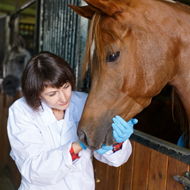
Image © Shutterstock

 The latest



