


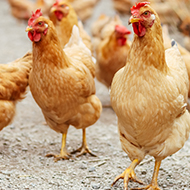
The method could reduce the burden of IBV on the poultry industry.
Researchers at the Pirbright Institute are exploring new strategies for the development of an infectious bronchitis virus (IBV) vaccine.
In the journal Virology, scientists explain how they used ‘targeted attenuation’ to make specific modifications to weaken the virus, without compromising its ability to stimulate immunity.
It is hoped the method could reduce the burden of IBV on the poultry industry, improve welfare and protect food security. It may also have broader benefits for vaccine development.
Dr Erica Bickerton explains: “By using targeted attenuation we can develop vaccines that are more effective and adaptable to new strains. It also opens up the possibility of developing vaccines against other coronaviruses.”
IBV, also known as avian coronavirus, is a respiratory condition that leads to a loss of weight and drop in egg production. It has also raised a number of welfare concerns.
One of the biggest challenges facing the poultry industry, the disease is currently managed via a combination of live attenuated vaccines and inactivated vaccines.
The live vaccines use a weakened form of the virus, created by repeatedly ‘growing’ the virus in eggs until it loses virulence. However, because this relies on random genetic mutations that occasionally compromise efficacy of the vaccine, it can be unreliable.
The method is also time-consuming, meaning that it’s unsuitable for responding to new or emerging strains of the virus.
Vaccines against other coronaviruses, such as SARS-CoV-2, primarily target the Spike (S) protein. However, the proven ineffectiveness of this approach has underscored the need for alternative strategies.
In the study, the team examined a different target — the non-structural protein (nsp3), specifically a region called the macrodomain. By introducing targeted mutations within this protein, they identified genetic changes that could weaken the virus while maintaining its capacity to induce immunity.
The study identifies targets conserved across IBV strains and the coronovirus family, suggesting a universal approach to vaccine development through rational attenuation.


 Eligible members of BEVA will be able to vote for their Council team until Monday, 17 August 2026. Members will have received an election email on 17 July.



