


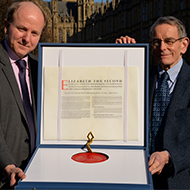
The Charter established veterinary nursing as a fully regulated profession.
The RCVS is celebrating the tenth anniversary of its 2015 Royal Charter, which sets out the role of the College and underpins many of its core functions.
Established thorough a series of Royal Charters, dating from 1844 and 1967, the 2015 Charter crucially established veterinary nursing as a fully regulated profession.
Not only did it empower VN Council to set standards for education, training and CPD, but it also introduced a formal register for veterinary nurses, who were then able to use the RVN post nominals.
Furthermore, the charter strengthened the foundation of existing RCVS projects, such as the Practice Standards Scheme (PSS), and provided a foundation for projects such as the Mind Matters Initiative and VN Futures.
Reflecting on how far the veterinary professions have come since the introduction of the charter, RCVS president Linda Belton said:
“The 2015 Charter gave us the opportunity to extend our regulation to include veterinary nurses and to widen our Royal College functions in support of a profession that is fit for purpose, and to enhance public confidence in our work. As a compassionate regulator, the Royal Charter is also essential in allowing us to support veterinary professionals to succeed, further aiding us in our mission to uphold animal health and welfare, and also public health.”
VN Council council Belinda Andrews-Jones emphasised the need to provide formal protection of the title of veterinary nurse to boost public confidence:
“As it stands, anyone can still call themselves a veterinary nurse and this is unacceptable. It is worth noting, though, that the 2015 Charter has allowed us to kick-start considerations around who and how the wider veterinary team, including allied professionals, could and should be regulated.
“Our work towards achieving a new Act will help us further in these areas, and increase our regulatory remit to allow us to have oversight of more individuals who also have key impacts on animal health and welfare and public health.”
She added: “I'm excited to see what the next ten years will bring for the College and the professions. It is fantastic to reflect on how far we have come in the past ten years with the College now able to fully support both vets and vet nurses to develop and thrive within their roles, but we must continue moving forward.”
Image (C) RCVS.


 Defra has published guidance for the vet sector ahead of a proposed UK-EU Sanitary and Phytosanitary agreement.



