


Study explores dog owner personalities
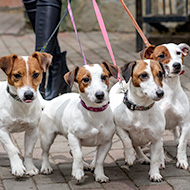
Jack Russell terrier owners were found to be the most loyal and faithful personality types.
The Kennel Club has released new research highlighting the dominant personality traits of dog owners, suggesting that dog owners may unconsciously select breeds that typically match their own personality.
One such example of this is Jack Russel terrier owners. Of those surveyed, 88 per cent agreed that they were loyal and faithful, 87 per cent agreed that they liked to help others, 84 per cent agreed that they were friendly, 83 per cent that they were trustworthy and 82 per cent good listeners.
The organisation used the Big Five traits method of evaluating personalities to rank dog owners against personality statements – which in turn reveals levels of extroversion, openness, agreeableness, emotional stability and conscientiousness.
Core personality traits which dog owners ranked the most highly for when compared to those who own other breeds were:
• springer Spaniel – most traditional, reserved, and punctual
• border terrier – most charming, lively and exuberant
• cocker Spaniel – most creative and family-orientated
• Staffordshire bull terrier – most affectionate and trustworthy
• Jack Russell terrier and miniature schnauzer – most loyal and faithful.
Evaluating the results, the organisation found similarities between owners' personality traits, and the typical traits of the breed they own. Using the Big Five method, owners of golden retrievers ranked as the happiest and most positive, while golden retrievers are known to have a happy temperament.
Similarly, Staffordshire terrier owners ranked as the most affectionate personality type, with Staffordshire terriers considered to have very affectionate personalities.
Spokesperson for The Kennel Club, Bill Lambert, discussed the research: “It appears that we can often tell a lot about a person from the type of dog that they own, with the dominant personality traits of Jack Russell owners being their loyalty, generous spirit for helping others and their trustworthiness.
“Each breed has distinct characteristics, traits and care needs, which helps would-be owners understand more about whether they might be a good fit for them.
“It is quite striking to see how many people unconsciously select dog breeds with personalities that match their own character, showing that birds of a feather really do flock together.”


 Defra has published guidance for the vet sector ahead of a proposed UK-EU Sanitary and Phytosanitary agreement.



