


MSD announces only BRD vaccine that can be administered in early life.
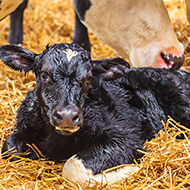
MSD Animal Health has announced the first bovine respiratory disease (BRD) vaccine for newborn calves.
In a press release, the manufacturer said its new BOVILIS® INtranasal RSP™ Live vaccine is now licensed for use in calves from birth onwards.
It is the only BRD vaccine that can be administered in early life – a significant advantage given that the sooner young calves can be protected from viral BRD and the harm it causes, the better.
An MSD Animal Health spokesperson said: “BOVILISâ INtranasal RSPä Live delivers the fastest on-farm protection of all the available pneumonia vaccines, with an onset of immunity after administration for BRSV of just six days (for calves vaccinated from the day of birth onwards) and five days (for calves vaccinated from the age of one week onwards).
“Onset of immunity after administration for Pi3V is one week after vaccination. The duration of immunity is 12 weeks for both viruses.”
BRD is caused by bovine respiratory syncytial virus (BRSV) and parainfluenza virus 3 (Pi3).
Early and fast protection against pneumonia is important. Indeed, research published in the Journal of Dairy Science shows that replacement heifers that do not suffer pneumonia while they are calves produce more than 500 kg more milk during their first lactation.
“BOVILIS® INtranasal RSP™ Live also has significant practical usage benefits in that it can now be used on farm at the same time as other early life interventions associated with newborn calves – for example, colostrum/first milk feeding, navel management, tagging, jacketing and necessary pen movements,” the spokesperson continued.
“Additionally, BOVILIS® INtranasal RSP™ Live can be used up to six hours after mixing with the solvent, which is the longest of all the available intranasal vaccines for these pathogens. It is supplied as a farm-friendly, easy-to administer nasal suspension product that doesn’t need a specific applicator – although for maximum flexibility an easy-clean injector and nozzle kit is available for vaccinating multiple animals.”


 Veterinary practices are being urged to help owners safely dispose of any unused and expired pet medicines - not just antibiotics - during November's Animal Medicines Amnesty.



