


Disappointment over government inaction on breed specific legislation
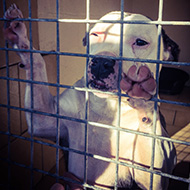
“Public safety is paramount, but the law must be proportionate and not contribute to the unnecessary suffering of innocent animals" - Christina Rees MP.
Members of the Commons Petitions Committee have expressed disappointment following the Department for Environment, Food and Rural Affairs (DEFRA) response to concerns over Breed Specific Legislation (BSL).
In June, Petitions Committee MPs wrote to then DEFRA minister Jo Churchill expressing concern about the impact of BSL – which bans the ownership of certain breeds – and the serious cost of these laws on some dogs.
The MPs asked whether the government would gather new evidence to see if reform is needed on the legislation and questioned how it would meet the welfare needs of all dogs held in kennels under the Dangerous Dogs Act.
The committee also asked DEFRA to confirm what actions they were taking to protect dogs seized under the Dangerous Dogs Act that are later identified by a court to pose no threat to public safety.
MPs asked whether the government would consider the re-homing of such dogs by responsible organisations, and the removal of strict conditions that apply to banned breeds, such as muzzling in public.
Reponding to the committee, Lord Goldsmith of Richmond Park set out a defence of the current laws, despite extensive criticism from animal welfare charities and hundreds of thousands of petitioners.
Petitions Committee MP Christina Rees, who led the most recent debate on breed specific legislation, said that while she welcomes some of the work undertaken by the government, she argues that more needs to be done to protect dog welfare.
“Under current laws some breeds of dog can be kept in kennels for months pending lengthy court hearings, and often can’t be re homed even when they pose no danger to the public. Hundreds of dogs are needlessly destroyed every year because of this cruel legislation,” she said.
“Public safety is paramount, but the law must be proportionate and not contribute to the unnecessary suffering of innocent animals. While I welcome the government’s work with police forces to increase uptake of the interim exemption scheme - which allows dogs to be temporarily released and returned to their owners pending court hearings - much more needs to be done to protect the welfare of these dogs.
Ms Rees added: “I know petitioners and campaigners alike who have called for reform of BSL will be as disappointed as I am by the Government’s latest ‘copy and paste’ response on this issue.”
Petitions Committee chair Catherine McKinnell MP described the government's unwillingness to review breed specific provisions in the Dangerous Dogs Act as 'hugely disappointing', adding:
“Since 2020, petitions calling for a change in the law to protect these innocent animals have received more than 350,000 signatures, and yet the Government has refused time and again to review legislation on banned breeds, or even gather new evidence on the risks of banned breeds and effectiveness of breed specific legislation.
“It is particularly disappointing the Minister has refused to even meet the person who started the most recent petition on this subject. The Government must recognise the significant public concern about these laws, and reconsider its decision not to review this.”
The complete correspondence, including the Government response, is available on the Petitions Committee website.

 The latest



