


Study reveals extent of suboptimal vaccination practice in sheep
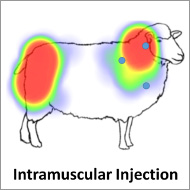
Just 7.7 per cent of UK sheep farmers were able to correctly identify the correct location for intramuscular vaccination administration.
A new study led by researchers at the Royal Veterinary College (RVC) has revealed the extent of suboptimal vaccination practice in sheep and barriers to training for farmers in the UK.
The study, published in Vet Record, provides valuable information for the industry to help guide the education of vaccination techniques. It is hoped that the findings will ultimately improve technique and storage, enhance vaccination efficacy, animal welfare and reduce disease.
In the study, the team led by newly-qualified veterinary surgeon Lauren Hill sent a survey to UK sheep farmers about their vaccination technique and storage, which was studied in regards to training.
Of the 370 respondents, just 26.1 per cent of participants correctly identified the correct location of the subcutaneous, 38 per cent for inter-dermal and 7.7 per cent for intramuscular vaccination administration.
The study also revealed that just 45.5 per cent of respondents stored vaccines in a fridge specific to veterinary medicines, 3.9 per cent used a temperature logger and 6.4 per cent undertook daily fridge temperature checks. In addition, 45.5 per cent of respondents kept vaccines 48 hours or longer after first use and 11.1 per cent kept them until the next time they planned to vaccinate.
Barriers to training were also considered, and the study identified these to be time (45.6%); money (35.8%); not being aware training courses existed (34.8%); feeling they already knew how to vaccinate safely and effectively (40.7%). An additional 73.9 per cent of respondents were unaware of any training courses they could attend, highlighting the need for advertising and promoting training within the industry.
Researchers say the study highlights a need to streamline training within the industry and more uniform messages on vaccination techniques. It also calls for more vaccination training options to be made more available to farmers.
Furthermore, the study shows the opportunities available to vets to assist in the development of vaccination techniques and storage by training farmers, and even the potential for interprofessional collaboration to bridge this knowledge gap.
Dr Nicola Blackie, senior lecturer in production animal science and part of the RVC research team, said: “Suboptimal vaccination technique is not due to unwillingness to attend training but more needs to be done to promote and reach the farmers.
“There is evidence that suboptimal vaccination technique is potentially occurring on UK sheep farms. For all injection types, a wide range of vaccination locations were indicated and a majority improperly administered or stored vaccines.”


 Two independent vets have launched a podcast to help owners strengthen their bond with pets. Dr Maggie Roberts and Dr Vanessa Howie, who have worked in both veterinary practice and major charities, are keen to use their experience to enable people to give pets a better life.



