
Your data on MRCVSonline
The nature of the services provided by Vision Media means that we might obtain certain information about you.
Please read our Data Protection and Privacy Policy for details.

In addition, (with your consent) some parts of our website may store a 'cookie' in your browser for the purposes of
functionality or performance monitoring.
Click here to manage your settings.
If you would like to forward this story on to a friend, simply fill in the form below and click send.

Your friend's email:
Your email:
Your name:
 
 
Send Cancel

Chief vet removes foot-and-mouth disease control zone
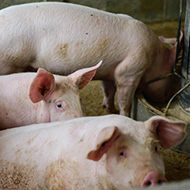
The symptoms of swine vesicular disease can be confused with foot and mouth disease.
Officials declare a new temporary control zone for swine vesicular disease.

A temporary disease control zone has been removed after tests for a suspected case of foot and mouth disease virus (FMDV) returned negative. 

The 10km control zone was placed around a premises near Feltwell, Kings Lynn, on Thursday (June 23) following suspicion of vesicular disease in pigs.

In its latest update, Defra said: “Following official testing at the UK national reference laboratory, the UK Chief Veterinary Officer has negated suspicion of foot and mouth disease in pigs at a premises Near Feltwell, Kings Lynn and West Norfolk, Norfolk. The 10 km Temporary Control Zone (foot and mouth disease) has been revoked.

“Suspicion of vesicular disease in pigs remains and a new Temporary Control Zone (Swine vesicular disease) has been declared.”

According to Defra, the symptoms of swine vesicular disease can be confused with foot and mouth disease. The main sign is blisters, appearing at the top of hooves, between the toes and occasionally on the snout, tongue and lips. Other signs include lameness, loss of appetite and fever.

Swine vesicular disease is spread by contact with infected pigs or body fluids, pigs eating infectious meat, or contact with anything contaminated with the virus. Pig keepers are urged to practise good biosecurity on their premises and to report any suspected cases to the APHA.

The condition does not affect humans, although there have been some isolated cases of accidental infection of laboratory personnel working with the virus. The last UK outbreak occurred in 1982.

Become a member or log in to add this story to your CPD history

FIVP publishes CMA Compliance Checklist

News Story 1
 FIVP has published a CMA Compliance Checklist to support independent practices with the Market Investigation Order.

The document includes deadlines for small and large businesses, with tick boxes for each of the tasks. The organisation also invites practices to contact them for support with requirements.

Rita Dingwall, FIVP chair, said: FIVP appreciates that navigating the new CMA requirements can feel daunting. We hope this checklist will make things a little easier, helping independent practices work through what is required with confidence. 

Click here for more...
News Shorts
APHA launches free virtual work experience programme

The Animal and Plant Health Agency (APHA), in collaboration with Springpod, has launched a free virtual work experience programme, giving young people across the UK the chance to explore careers dedicated to protecting animal and plant health.

The on-demand programme offers a unique insight into career opportunities within APHA, showcasing how students can contribute to tackling some of the UK's most critical biosecurity and environmental challenges.

Designed for students aged 13 and over, the course includes more than 10 hours of engaging content featuring real-life industry insights, scenario-based challenges, and practical guidance on applying for jobs. To register for the course, visit the APHA website.

