


Half of British butterfly species threatened with extinction
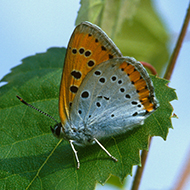
Pictured: Large Copper (C) Jim Asher.
Half of all British butterfly species are now on the Red List, with 24 species listed as threatened and eight listed as endangered.
The latest Red List assessment of butterflies has been published today, using data gathered through the UK Butterfly Monitoring Scheme and Butterflies for the New Millennium recording scheme. Scientists from Butterfly Conservation placed the data against the IUCN Red List criteria of extinction risk.
Dr Richard Fox, head of science for Butterfly Conservation, said: “Shockingly, half of Britain’s remaining butterfly species are listed as threatened or Near Threatened on the new Red List.
“Even prior to this new assessment, British butterflies were among the most threatened in Europe, and now the number of threatened species in Britain has increased by five, an increase of more than one-quarter.
“While some species have become less threatened, and a few have even dropped off the Red List, the overall increase clearly demonstrates that the deterioration of the status of British butterflies continues apace.”
The research team assessed 62 species, and found that four are extinct in Britain – the black-veined white, large tortoiseshell, large copper and Mazarine blue.
Of the butterflies assessed, 41 per cent of the remaining species are classed as Threatened.
Moving from Vulnerable to Endangered are the large heath and the grayling, and the swallowtail and Adonis blue have moved from Near Threatened to Threatened.
Although the data warns that time is running out to conserve many butterfly species, the scientists found that some species had an improvement in status following conservation efforts.
Extinct in Great Britain from 1979, the Large Blue has been reintroduced to the country by an intensive and widely successful reintroduction programme, and has moved from Critically Endangered to Near Threatened.
The high brown fritillary has moved from Critically Endangered to Endangered, and the Duke of Burgundy and pearl-bordered fritillary have moved from Endangered to Vulnerable.
“Where we are able to target conservation work, we have managed to bring species back from the brink, but with the extinction risk increasing for more species than are decreasing, more must be done to protect our butterflies from the effects of changing land management and climate change,” added Dr Fox.
“Without action it is likely that species will be lost from Britain’s landscapes for good, but Butterfly Conservation is taking bold steps to improve key landscapes for butterflies and reduce the extinction risk of many threatened species.”
Image (C) Jim Asher and Neil Hulme


 SPVS and FIVP have collaborated to launch a short survey about the proposed reform of the Veterinary Surgeons Act.



