


Government announces support for Ukrainian refugees with pets
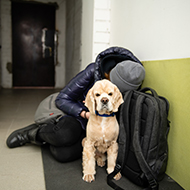
Ukrainian nationals will be able to bring their pets to the UK with any quarantine costs met by the government.
Ukrainians seeking refuge in the UK with their pets will have their vaccination, microchipping and quarantine costs covered by the government, it has been confirmed.
The Department for Environment, Food and Rural Affairs (DEFRA) announced today (15 March) that it has introduced new emergency support for those fleeing Ukraine with their pets.
A statement reads: 'Using an emergency licence, Ukrainian nationals can bring their pets to the UK with any quarantine costs met by the government.
'The government will also be covering their vaccination, microchipping and quarantine costs, recognising that many Ukrainian individuals will not have been able to complete the full health preparations required for their pet on arrival. '
A pet that has not been vaccinated against rabies may be quarantined for up to four months. Defra said that it will consider pets 'on a case by case basis, with a shortened quarantine period for those that are vaccinated.'
'We are working with vets and quarantine facilities to make sure that the arrival of Ukrainians in the UK is not delayed by the process to make arrangements for their pets,' the statement continued.
Ukrainian nationals are encouraged to contact the Animal and Plant Health Agency at pettravel@apha.gov.uk or call +44 3000 200 301 option 2 before their arrival. They will then be able to confirm their approval for their emergency licence and arrange any quarantine stays required to complete the rabies risk management process.
Owing to the limited number of quarantine facilities in the UK, those fleeing Ukraine with their pets will be prioritised over animals brought over on a commercial basis, which includes rescue imports.
Animal welfare minister Lord Goldsmith said: “Ukrainian nationals are in an appalling situation. I’m pleased that Ukrainian refugees will be able to bring their pets to the UK with any quarantine costs paid for by the Government.
“As part of our new streamlined process, any animals which have already received some treatment may also have their stay in quarantine reduced and be returned back to their owner as soon as possible.”


 Two independent vets have launched a podcast to help owners strengthen their bond with pets. Dr Maggie Roberts and Dr Vanessa Howie, who have worked in both veterinary practice and major charities, are keen to use their experience to enable people to give pets a better life.



