


Study reveals why pigs don’t get sick from COVID-19
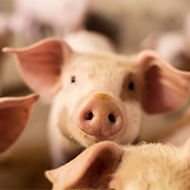
Pig cells undergo apoptosis - or controlled cell death - in response to infection with COVID-19.
A new study shedding light on why pigs don’t get sick with COVID-19 could lead to better treatments in humans, according to new research.
Since the beginning of the pandemic, research into pigs has revealed that the animals do not display clinical signs of the disease, nor do they transmit the virus to other animals.
To find out why this was happening, researchers at IOWA State University introduced the virus to cultured porcine and human respiratory epithelial cells that line the respiratory tract.
They found the pig cells underwent apoptosis - or controlled cell death - in response to infection at a higher rate than human epithelial cells. The findings are published in the journal Cell Death Discovery.
Study author Rahul Nelli, a research assistant professor of veterinary diagnostic and production animal medicine, said: “When we looked under the microscope, there was an interesting phenomenon going on inside the cells. The nuclei of the infected pig cells were starting to shred into fragments but not uninfected pig cells.”
Shredding of the nucleus is a sign of apoptosis, which could be significant in helping pigs to avoid symptoms after exposure to SARS-CoV-2. If triggered early in the infection, apoptosis causes very little tissue damage and confines viral infection, thereby mitigating the risk of severe illness.
While human cells can also undergo apoptosis in response to coronavirus infection, the researchers found they do so much less often than pig cells. According to the study, porcine cells are around 100 times more likely to undergo apoptosis than human cells.
Human cells are more prone to succumb to necrosis, a less regulated form of cell death than apoptosis. The contents of a cell escape into the surrounding space during necrosis, triggering a strong hyperimmune response not seen during apoptosis.
The study concludes that a wide-scale apoptosis response helps avoid disease because it disposes of infected cells quickly without the immune system overreacting. Conversely, wide-scale necrosis and the resulting hyperimmune response is less favourable to host cells.
Co-author Luis Gimenez-Lirola, an associate professor of veterinary diagnostic and production animal medicine, commented: “We don’t want to over-conclude, but this response is probably something intrinsic to the pig immune system that is innate and not acquired. The idea is to kill the virus subtly but fast enough, so there’s not an excessive immune response triggered.”
The team hopes that further study could pave the way to therapies to trigger apoptosis in human cells, helping those infected with COVID- to avoid severe symptoms.


 The




