
Your data on MRCVSonline
The nature of the services provided by Vision Media means that we might obtain certain information about you.
Please read our Data Protection and Privacy Policy for details.

In addition, (with your consent) some parts of our website may store a 'cookie' in your browser for the purposes of
functionality or performance monitoring.
Click here to manage your settings.
If you would like to forward this story on to a friend, simply fill in the form below and click send.

Your friend's email:
Your email:
Your name:
 
 
Send Cancel

DNA study offers fresh insights into pig muscle growth
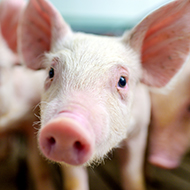
The findings could be used to predict muscle growth in developing pigs.
Researchers hope their findings will help to support breeding selection programmes.

New research revealing insights into pig muscle development could lead to new tools to inform breeding selection.

The findings are published in G3: Genes, Genomes, Genetics by a team from the Roslin Institute and the Centre for Tropical Livestock Genetics and Health.

In the study, researchers analysed DNA in frozen tissue samples from muscle in piglets at various stages of development. Through this, they were able to pinpoint regions of DNA that control activity in genes linked to muscle growth and study activity in these genes. 

The scientists noted variations in regions of DNA between small and large piglets, suggesting a difference in how DNA is regulated, which subsequently governs muscle growth between large and small piglets. 

It is hoped the findings could help to predict muscle growth in developing pigs, to produce litters with fewer very small piglets. The improved knowledge could also underpin research into other areas of pigs' development, health and welfare.

Looking ahead, the team hopes to identify variations in the genetic code of pigs associated with growth and better understand how these differences regulate the activity of genes involved in muscle development to inform pig breeding programmes.

They also hope to apply their method of analysing frozen tissue to investigate how the genetic code of livestock controls their characteristics. The use of frozen tissues samples can also help to limit the number of animals used for research. 

Dr Emily Clark, from the Roslin Institute, explains: “Pigs are widely farmed and it is important that we understand their biology, including detailed knowledge of their genetic code. Our findings help to improve understanding of the pig genome and will support further research to aid breeding selection programmes.”

Become a member or log in to add this story to your CPD history

New RCVS Academy courses to remove barriers in vet care

News Story 1
 The RCVS Academy has launched two courses to its new client support series, as it seeks to improve accessibility in veterinary settings.

The courses will help professionals to support assistance dog partnerships and clients with hearing loss.

The Hearing loss and Assistance dogs courses saw RCVS project lead Catherine Hemingway collaborate with the British Deaf Association and Assistance Dogs UK. Vets will gain practical guidance on supporting clients with additional needs.

Each course takes an hour to complete, and can be accessed by RCVS registrants for free. 

Click here for more...
News Shorts
APHA launches free virtual work experience programme

The Animal and Plant Health Agency (APHA), in collaboration with Springpod, has launched a free virtual work experience programme, giving young people across the UK the chance to explore careers dedicated to protecting animal and plant health.

The on-demand programme offers a unique insight into career opportunities within APHA, showcasing how students can contribute to tackling some of the UK's most critical biosecurity and environmental challenges.

Designed for students aged 13 and over, the course includes more than 10 hours of engaging content featuring real-life industry insights, scenario-based challenges, and practical guidance on applying for jobs. To register for the course, visit the APHA website.

