
Your data on MRCVSonline
The nature of the services provided by Vision Media means that we might obtain certain information about you.
Please read our Data Protection and Privacy Policy for details.

In addition, (with your consent) some parts of our website may store a 'cookie' in your browser for the purposes of
functionality or performance monitoring.
Click here to manage your settings.
If you would like to forward this story on to a friend, simply fill in the form below and click send.

Your friend's email:
Your email:
Your name:
 
 
Send Cancel

Seaweed supplements to be trialled to reduce livestock methane emissions
UK and Irish seaweeds may significantly reduce GHG agricultural emissions and provide extra health benefits when used as a supplement for farm animals.

UK farms will trial the method after successful early research by IGFS.

Following an agreement at COP26 where the US and EU pledged to reduce agricultural outputs from ruminant livestock by upwards of 30 per cent by 2030, scientists at Queen's University Belfast's Institute for Global Food Security (IGFS) will feed seaweed to farm animals to slash methane by at least 30 per cent.

Early laboratory research done by IGFS has shown promising results when feeding ruminants native Irish and UK seaweeds, which are rich in active compounds called phlorotannins, which are antibacterial and improve immunity, potentially carrying additional health benefits for the animals. 

Trials of feeding ruminants seaweeds sourced from the Irish and North Sea are about to begin on UK farms, with one three-year project working in partnership with UK supermarket Morrisons and its network of British beef farmers, who will facilitate farm trials. 

IGFS, along with the Agrifood and Biosciences Institute (AFBI), who is also partnering on the Morrisons project, is also involved in an international project worth $2 billion, which monitors the effect of seaweed in the diet of pasture-based livestock. 

Sharon Huws, Professor of Animal Science and Microbiology and IGFS lead, said that she expected the combined research to evidence a reduction in GHG emissions of at least 30 per cent: “The science is there. It’s simply a matter of providing the necessary data and then implementing it.

“Using seaweed is a natural, sustainable way of reducing emissions and has great potential to be scaled up. There is no reason why we can’t be farming seaweed – this would also protect the biodiversity of our shorelines.

“If UK farmers are to meet a zero-carbon model, we really need to start putting this kind of research into practice. I hope IGFS and AFBI research can soon provide the necessary data and reassurance for governments to take forward.”


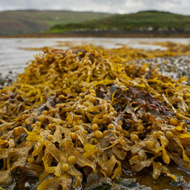
Image (C) Wolfgang Hasselmann

Become a member or log in to add this story to your CPD history

Vets and vet nurses needed for nutrition study

News Story 1
 The University of Glasgow is seeking participants for a new study into vet professionals nutrition-related knowledge, competence and decision-making.


UK-based veterinary surgeons and registered veterinary nurses are being invited to take part in a project investigating nutrition-related patient care and client advice. Participants must have been qualified for between two and 10 years, and must be currently working in clinical practice with small animals.

To register to take part, those interested should complete a screening questionnaire. 

Click here for more...
News Shorts
APHA launches free virtual work experience programme

The Animal and Plant Health Agency (APHA), in collaboration with Springpod, has launched a free virtual work experience programme, giving young people across the UK the chance to explore careers dedicated to protecting animal and plant health.

The on-demand programme offers a unique insight into career opportunities within APHA, showcasing how students can contribute to tackling some of the UK's most critical biosecurity and environmental challenges.

Designed for students aged 13 and over, the course includes more than 10 hours of engaging content featuring real-life industry insights, scenario-based challenges, and practical guidance on applying for jobs. To register for the course, visit the APHA website.
