


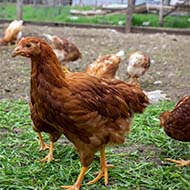
All bird keepers are now legally required to follow strict biosecurity measures.
An Avian Influenza Prevention Zone (AIPZ) has been introduced across the whole of the United Kingdom following a number of detections of the disease in wild birds.
The measure, declared by the UK’s chief veterinary officers on Wednesday (3 November), means that all bird keepers are now legally required to follow strict biosecurity measures to protect their flocks.
Under the AIPZ, keepers with more than 500 birds must restrict access on their sites to non-essential people, workers will be required to change footwear and clothing before entering bird enclosures, and site vehicles will need to be regularly cleaned and disinfected.
Keepers of backyard chickens, ducks and geese must also now take steps to limit the spread of the disease to poultry and other captive birds.
The introduction of the AIPZ comes after avian flu was identified in captive birds in England, Wales and most recently, Scotland. Wild birds at various sites across the UK have also tested positive for the disease.
A joint statement issued by the Chief Veterinary Officers for England, Scotland and Wales said: “Following a number of detections of avian influenza in wild birds across Great Britain we have declared an Avian Influenza Prevention Zone across the whole of Great Britain. This means that all bird keepers must take action now to prevent the disease spreading to poultry and other domestic birds.
“Whether you keep just a few birds or thousands, you are now legally required to introduce higher biosecurity standards on your farm or small holding. It is in your interests to do so in order to protect your birds from this highly infectious disease.
“The UK health agencies have confirmed that the risk to public health is very low and UK food standards agencies advise that bird flu poses a very low food safety risk for UK consumers.”
The risk levels for avian flu incursion in wild birds in the UK has been raised from ‘medium’ to ‘high’. For poultry and captive birds, the risk level has been raised from ‘low’ to ‘medium’ at premises where biosecurity is below the required standards.
Keepers are not currently required to house their birds indoors, but Defra states this ‘will be kept under regular review.


 Defra has published guidance for the vet sector ahead of a proposed UK-EU Sanitary and Phytosanitary agreement.



