
Your data on MRCVSonline
The nature of the services provided by Vision Media means that we might obtain certain information about you.
Please read our Data Protection and Privacy Policy for details.

In addition, (with your consent) some parts of our website may store a 'cookie' in your browser for the purposes of
functionality or performance monitoring.
Click here to manage your settings.
If you would like to forward this story on to a friend, simply fill in the form below and click send.

Your friend's email:
Your email:
Your name:
 
 
Send Cancel

Avian influenza confirmed in Worcestershire
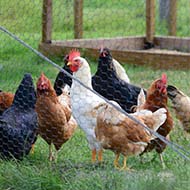
The UK's chief veterinary officers are calling on poultry keepers to implement biosecurity measures now to reduce the spread of avian flu this winter.

A 3km and 10km control zone has been placed around the infected premises. 

All birds at a wildbird rescue centre in Worcestershire will be culled following the identification of highly pathogenic H5N1 avian influenza on Tuesday (26 October).

A 3km and 10km temporary control zone has been placed around the infected premises, which does not supply meat, poultry or eggs to the commercial food chain.
An investigation is now underway to determine the most likely source of the outbreak.

“We have taken swift action to limit the spread of the disease, and any birds at risk of infection will now be humanely culled,” commented UK chief veterinary officer Christine Middlemiss.

“UK Health Security Agency has confirmed that the risk to public health is very low and the Food Standards Agency has said that bird flu poses a very low risk to food safety for UK consumers.”

Earlier this month, the UK’s four chief veterinary officers urged swift action from poultry keepers to reduce the risk of avian influenza this winter. While the UK was recently declared free from avian flu, there have now been 27 outbreaks in poultry and captive birds in the last year and more than 300 outbreaks in wild birds.

“As we move into the higher risk period over winter, bird keepers should pay extra attention to the health of their birds,” Ms Middlemiss continued.

“Anybody who suspects disease should report it to their vet or APHA immediately. The best way to tackle this disease is for poultry keepers to ensure that they have strong biosecurity measures in place.”

Become a member or log in to add this story to your CPD history

Vets launch new podcast for pet owners

News Story 1
 Two independent vets have launched a podcast to help owners strengthen their bond with pets. Dr Maggie Roberts and Dr Vanessa Howie, who have worked in both veterinary practice and major charities, are keen to use their experience to enable people to give pets a better life.

The venture, called Vets Talking Pets, provides advice and information on a range of topics, including how to select a suitable pet, where to obtain them and how to get the best out of your vet. Maggie and Vanessa will also discuss sensitive subjects, including end-of-life care, raw food diets and the cost of veterinary care.

The podcast can be found on all the usual podcast sites, including Podbean, Apple, Amazon Music and YouTube. 

Click here for more...
News Shorts
BSAVA announces 12th Edition of the Small Animal Formulary

The BSAVA has published an updated edition of its Small Animal Formulary, which includes new drug monographs and emergency drug doses for rabbits, rodents, birds and reptiles.

One of BSAVA's most trusted and widely used clinical resources, this 12th edition of the manual also includes seven new client information leaflets and information on drugs used for the management of urinary incontinence.

Part A of the Formulary, Canine and Feline, sees Fergus Allerton return as Editor-in-Chief, while Part B: Exotic Pets was edited by Joanna Hedley. For more information, visit the BSAVA website.

