
Your data on MRCVSonline
The nature of the services provided by Vision Media means that we might obtain certain information about you.
Please read our Data Protection and Privacy Policy for details.

In addition, (with your consent) some parts of our website may store a 'cookie' in your browser for the purposes of
functionality or performance monitoring.
Click here to manage your settings.
If you would like to forward this story on to a friend, simply fill in the form below and click send.

Your friend's email:
Your email:
Your name:
 
 
Send Cancel

New insights into devastating cattle disease
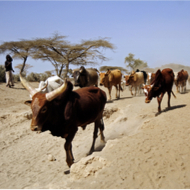
Trypanosomiasis causes economic hardship through fever, anaemia and weight loss.
Finding could lead to new treatments for African trypanosomiasis.

Researchers at the University of Edinburgh's Roslin Institute have gained fresh insights into the parasite that causes animal African trypanosome (AAT) infection, also known as sleeping sickness.

The study, published in PLOS Pathogens, reveals key differences in the biology of the Trypanosome congolense parasite, which causes infection in animals, compared with the closely related T. brucei, which affects humans.

Scientists hope their findings will lead to new drugs for AAT and support further studies into the T.congolese parasite, which is spread by biting flies and mainly affects cattle in sub-Saharan Africa.

The team also hopes that the findings will explain how drug resistance has hampered efforts to treat the disease. The same drugs have been used to manage infections for decades, and new therapies are urgently needed.

“The scale of animal African trypanosome infections is enormous, causing devastation to livestock, especially for cattle farmers,” explains Professor Liam Morrison of the Roslin Institute. “There are limited treatments available, and drug resistance is a significant problem. This research forms a valuable resource for the T. congolense parasite, which we hope will underpin more research to target this important pathogen.”

Trypanosomiasis is a chronic disease of livestock that causes fever, anaemia and weight loss. The condition is of most importance in cattle, but other animals, including dogs, can also be affected.

“Trypanosomiasis is a major problem for livestock owners in Africa, Asia and Latin America,” explains Michael Pearce from industry partner, GALVmed. “Developing new drug products is costly and it takes many years to develop and register safe and efficacious treatments.

“Understanding the metabolism of parasites such a trypanosomes helps researchers identify candidate molecules with the best chance of translation in to a successful treatment,” he said.

Become a member or log in to add this story to your CPD history

FIVP publishes CMA Compliance Checklist

News Story 1
 FIVP has published a CMA Compliance Checklist to support independent practices with the Market Investigation Order.

The document includes deadlines for small and large businesses, with tick boxes for each of the tasks. The organisation also invites practices to contact them for support with requirements.

Rita Dingwall, FIVP chair, said: FIVP appreciates that navigating the new CMA requirements can feel daunting. We hope this checklist will make things a little easier, helping independent practices work through what is required with confidence. 

Click here for more...
News Shorts
APHA launches free virtual work experience programme

The Animal and Plant Health Agency (APHA), in collaboration with Springpod, has launched a free virtual work experience programme, giving young people across the UK the chance to explore careers dedicated to protecting animal and plant health.

The on-demand programme offers a unique insight into career opportunities within APHA, showcasing how students can contribute to tackling some of the UK's most critical biosecurity and environmental challenges.

Designed for students aged 13 and over, the course includes more than 10 hours of engaging content featuring real-life industry insights, scenario-based challenges, and practical guidance on applying for jobs. To register for the course, visit the APHA website.

