


Anifera to evaluate the ability of its leading compound to enhance antiobiotic treatment.
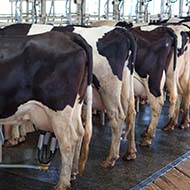
Animal health firm Anifera has received funding from the UK’s Centre for Innovation and Excellence in Livestock (CIEL) to conduct additional studies on bovine mastitis.
The firm will use the funding to evaluate the ability of its leading compound to enhance antibiotic treatment for Staphylococcus aureus, one of the leading causes of intramammary infections in dairy cows.
The study will be conducted in partnership with the Moredun Research Institute, and Anifera will use the results to confirm efficacy already noted in a previous small-scale study.
It also plans to explore options for the commercialisation of its compound to treat bovine mastitis.
“The project backed by CIEL, thanks to the support of Innovate UK, will greatly assist in determining the benefit that our leading compound can bring to veterinarians and dairy farmers in terms of direct reduction of mastitis and related costs,” commented Anifera board member, Dr Tony Benitz.
“It will also help us to establish the potential of our leading compound to enable the repurposing of older antibiotics, which may no longer be considered sufficiently effective.”
Bovine mastitis is considered to be the most common cause of economic loss for cattle farmers worldwide. Rising prevalence globally and increasing pressure to curb the use of new-generation antibiotics has created the need for alternative approaches, including repurposing older and less effective antibiotics for use in livestock.
Through its research, Anifera aims to develop compounds that can improve the efficacy of antibiotics, with the ultimate aim of reducing their use in animals. Its technology consists of a family of small molecules which, acting through a novel method of action, are proven to increase the susceptibility of resistant strains of bacteria to antibiotics.
”The need to find innovative ways to increase the efficacy of currently-used antibiotics is becoming much more critical, with significant pressure to reduce or discontinue the use of many newer first-line therapies,” explained Anifera CEO, Dr Gwynneth Thomas.
“We are grateful to CIEL and MRI for supporting this important study, which will allow us to move our leading compound closer to commercialisation as a more sustainable option for farmers, ultimately improving yields and quality and reducing unnecessary antibiotic use.”

 The BSAVA has opened submissions for the BSAVA Clinical Research Abstracts 2026.



