


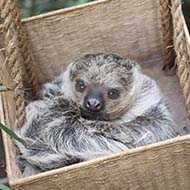
Two Linnie's two-toed sloths have been welcomed to the zoo.
Edinburgh Zoo has welcomed Scotland's only sloths, who were revealed yesterday (13 September).
Moana, a two-year-old male sloth, and Feira, a one-year-old female sloth, have moved in to the new Sloths and Armadillos building, which will be opened to the public gradually, in order to allow the new additions time to settle in.
The Linne's two-toed sloths have joined large hairy armadillos Nymeria and Diogo in the South American wildlife exhibit.
Senior animal experiences keeper at Edinburgh Zoo, Erika Oulton, commented on the new arrivals: “We are thrilled to have welcomed this brand-new species to the zoo and hope visitors will be able to spot Mo and Fe in their incredible new home during their visit.
“Our Brilliant Birds building has been refurbished to create an amazing space with lots of trees and ropes for our sloths to explore at their own pace. They are settling in well so far, though we’ll be keeping viewing hours limited for the first few weeks while they get used to their new surroundings.
“It is wonderful to open this exciting exhibit which our sloths are sharing with two large hairy armadillos who are important ambassadors for our charity’s conservation partners, working to protect threatened species and their habitats in Brazil.”
Linne's two-toed sloths are the worlds slowest mammal, and have the lowest variable body temperature of any mammal. They typically grow up to 50 – 60cm long, and are so sedentary that algae grows on their fur.
“We hope that by welcoming this well-loved species and further developing our animal experiences, we can help visitors foster a deeper connection with nature and inspire future conservationists to better protect wildlife across the globe,” Erika added.
Further information on Edinburgh Zoo and RZSS conservation work can be found here.
Image (C) RZSS


 Two independent vets have launched a podcast to help owners strengthen their bond with pets. Dr Maggie Roberts and Dr Vanessa Howie, who have worked in both veterinary practice and major charities, are keen to use their experience to enable people to give pets a better life.



