


Dispute arises over Geronimo post-mortem results
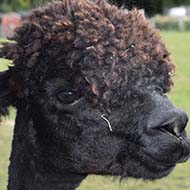
Geronimo was euthanised on Tuesday 31 August following a lengthy legal battle to save him.
A dispute has arisen over the results of a post-mortem examination carried out on Geronimo the alpaca, who was put down following a four-year legal battle over two positive bovine tuberculosis (TB) tests.
On Wednesday (8 September), the Department for Environment, Food and Rural Affairs (DEFRA) confirmed that several TB-like lesions had been found in Geronimo that are now undergoing further investigation. They added that the full post-mortem results would be completed by the end of the year.
Defra officials and Police officers removed eight-year-old Geronimo from his home at in South Gloucestershire on Tuesday 31 August, and later confirmed that the animal had been euthanised.
Following Geronimo's death, owner Helen Macdonald RVN, requested a copy of the post-mortem examination. Lawyer’s acting for Ms Macdonald confirmed she had received a letter containing the preliminary findings, which had been reviewed by veterinary surgeons.
A statement issued by the lawyers reads: “As reviewed by Dr Iain McGill and Dr Bob Broadbent, the preliminary gross post-mortem findings are negative for visible lesions typical of bovine tuberculosis.
“For clarity, there are no white or cream caseous, enlarged abscesses typical for bTB in alpacas whether in the lungs, bronchial, mediastinal or retropharyngeal lymph nodes.
"She has further requested that both fresh, frozen and formalin-fixed tissue and fluid samples be preserved and provided to an independent expert to carry out further tests."
In contradiction to this letter, chief veterinary officer Christine Middlemiss, said: “We have completed the initial post-mortem examination of Geronimo. A number of TB-like lesions were found and in line with standard practice, these are now undergoing further investigation.
“These tests include the developing of bacteriological cultures from tissue samples which usually takes several months - we would expect to complete the full post-mortem and culture process by the end of the year.”
Geronimo was brought over to the UK from New Zealand in 2017 and tested positive for TB shortly after. Since then, Ms Macdonald has spent tens of thousands of pounds in legal fees trying to save him.
The Government applied for a court order for Geronimo's destruction in 2018, after which the alpaca was given a stay of execution, with a deadline of the end of August.
Ms Macdonald launched a judicial review claiming that Government experts relied on "flawed science" and that her animal was healthy. The move marked the start of a long series of legal battles.


 The




