
Your data on MRCVSonline
The nature of the services provided by Vision Media means that we might obtain certain information about you.
Please read our Data Protection and Privacy Policy for details.

In addition, (with your consent) some parts of our website may store a 'cookie' in your browser for the purposes of
functionality or performance monitoring.
Click here to manage your settings.
If you would like to forward this story on to a friend, simply fill in the form below and click send.

Your friend's email:
Your email:
Your name:
 
 
Send Cancel

UK declared free from avian influenza
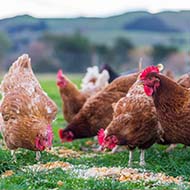
International standards have been met to declare the country free from avian flu.
Chief vet urges ongoing vigilance as the winter months approach.

The UK has been declared free from avian influenza following a significant outbreak of the disease last winter.

Chief veterinary officer Christine Middlemiss said international standards have been met to declare the country free from avian flu but urged poultry keepers to remain vigilant for signs of the disease as the winter approaches.

“The last year has been very challenging for all those who keep poultry and captive birds, and I would like to thank everyone for their efforts in helping us contain the disease,” she said. “This is an important milestone that will help our efforts to re-open export markets.”

The highly pathogenic strain of avian flu continues to spread throughout Europe in both wild and captive birds. Experts fear that as winter sets in, the possibility of migratory birds flying to the UK will increase the risks for domestic poultry.

A total of 26 cases of avian influenza were confirmed in kept birds and wild poultry in the UK between November 2020 and March 2021. For all cases, the APHA introduced movement restrictions to mitigate the disease spread and carried out investigations into the source and potential spread of the infection.

Several measures were also introduced to protect poultry from wild birds, including a ban on bird gatherings and a requirement for bird keepers to keep their flocks indoors.

“While we are now free of bird flu in this country there is a constant risk of the disease returning through wild birds and this is likely to increase as winter approaches, temperatures fall, and more migratory birds start arriving in the UK,” Ms Middlemiss added.

“Poultry and captive bird keepers should maintain good biosecurity practises, such as cleaning footwear, feeding birds indoors, and minimising contact with wild birds. Building these simple actions into routines now will go a long way to limiting the risk of future outbreaks.”

Become a member or log in to add this story to your CPD history

FIVP publishes CMA Compliance Checklist

News Story 1
 FIVP has published a CMA Compliance Checklist to support independent practices with the Market Investigation Order.

The document includes deadlines for small and large businesses, with tick boxes for each of the tasks. The organisation also invites practices to contact them for support with requirements.

Rita Dingwall, FIVP chair, said: FIVP appreciates that navigating the new CMA requirements can feel daunting. We hope this checklist will make things a little easier, helping independent practices work through what is required with confidence. 

Click here for more...
News Shorts
APHA launches free virtual work experience programme

The Animal and Plant Health Agency (APHA), in collaboration with Springpod, has launched a free virtual work experience programme, giving young people across the UK the chance to explore careers dedicated to protecting animal and plant health.

The on-demand programme offers a unique insight into career opportunities within APHA, showcasing how students can contribute to tackling some of the UK's most critical biosecurity and environmental challenges.

Designed for students aged 13 and over, the course includes more than 10 hours of engaging content featuring real-life industry insights, scenario-based challenges, and practical guidance on applying for jobs. To register for the course, visit the APHA website.

